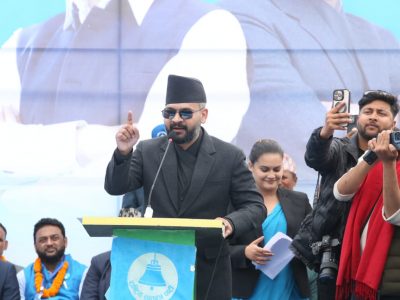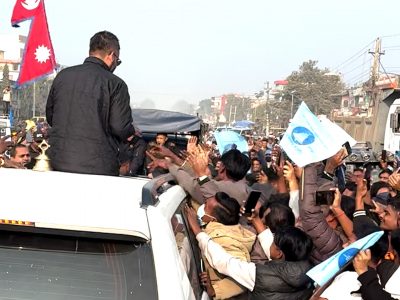

NIP Prepares to Form Government After Emerging as Largest Party

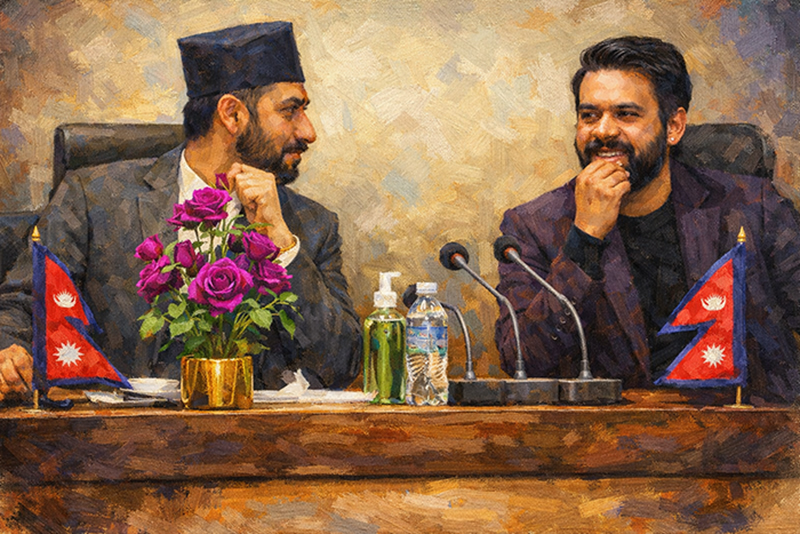
Kathmandu, March 8: After emerging as the largest party in the 2082 House of Representatives elections, the National Independent Party (NIP) has begun preparations to form a new government.
In its election manifesto released before the polls, the party placed strong emphasis on economic reform, highlighting productivity growth, regulatory reform, investment-friendly policies, development of a digital economy and financial sector reform as key priorities. Attention has now turned to how these commitments will be implemented once the government is formed.
The manifesto states that economic prosperity will be driven through productivity growth by maximizing the use of limited time, capital and resources to achieve competitive and sustainable production. It emphasizes effective coordination between private investment willing to take risks and a capable, transparent and facilitative public sector.
According to the party’s policy, the private sector will play a leading role in job creation, supply of goods and services, revenue contribution and capital investment, while the government will function mainly as a regulator and facilitator.
The party has also pledged to create an enterprise-friendly business environment by removing policy distortions and artificial barriers that hinder innovation, entrepreneurship and healthy competition.
The manifesto notes that Nepal must convert its youth demographic advantage into economic opportunities within the next 10 to 15 years to avoid falling into a long-term low-income trap. For this reason, productivity growth, skill development, capital formation and technology-based industrialization have been identified as national priorities.
The party has also proposed regulatory reforms by establishing professional, transparent and strong regulatory institutions free from political interference to control practices such as cartels, unhealthy competition, rent-seeking and policy exploitation.
Within the framework of a social market economy, the party plans to combine liberal economic policies that encourage private sector dynamism and innovation with equitable redistribution of national income through public education, health services, transportation, housing and social security.
The manifesto also proposes repealing about two dozen laws considered obstacles to economic progress or no longer relevant. It states that complicated laws and procedures will be revised or removed to reduce production costs, improve the business environment and attract domestic and foreign investment.
The party has set a goal of maintaining an average economic growth rate of seven percent annually over the next five years, aiming to lay the foundation for Nepal to become a respectable middle-income country. Based on this target, it aims to increase per capita income to more than 3,000 US dollars within five to seven years and expand the national economy to nearly 100 billion dollars.
Decisions regarding which laws and regulations will be repealed or amended will be based on independent analysis, the report of the High-Level Economic Reform Suggestion Commission 2081 and recommendations from the Confederation of Nepalese Industries and the Federation of Nepalese Chambers of Commerce and Industry.
Facebook Comment
Related News


latest Video
Trending News
- This Week
- This Month