

Bahuriya Review: A Minimalist Production That Boldly Questions Gender Norms
It was the very Lord Ram who banished Sita to the forest due to intense public questioning of her purity following her captivity by Ravana.

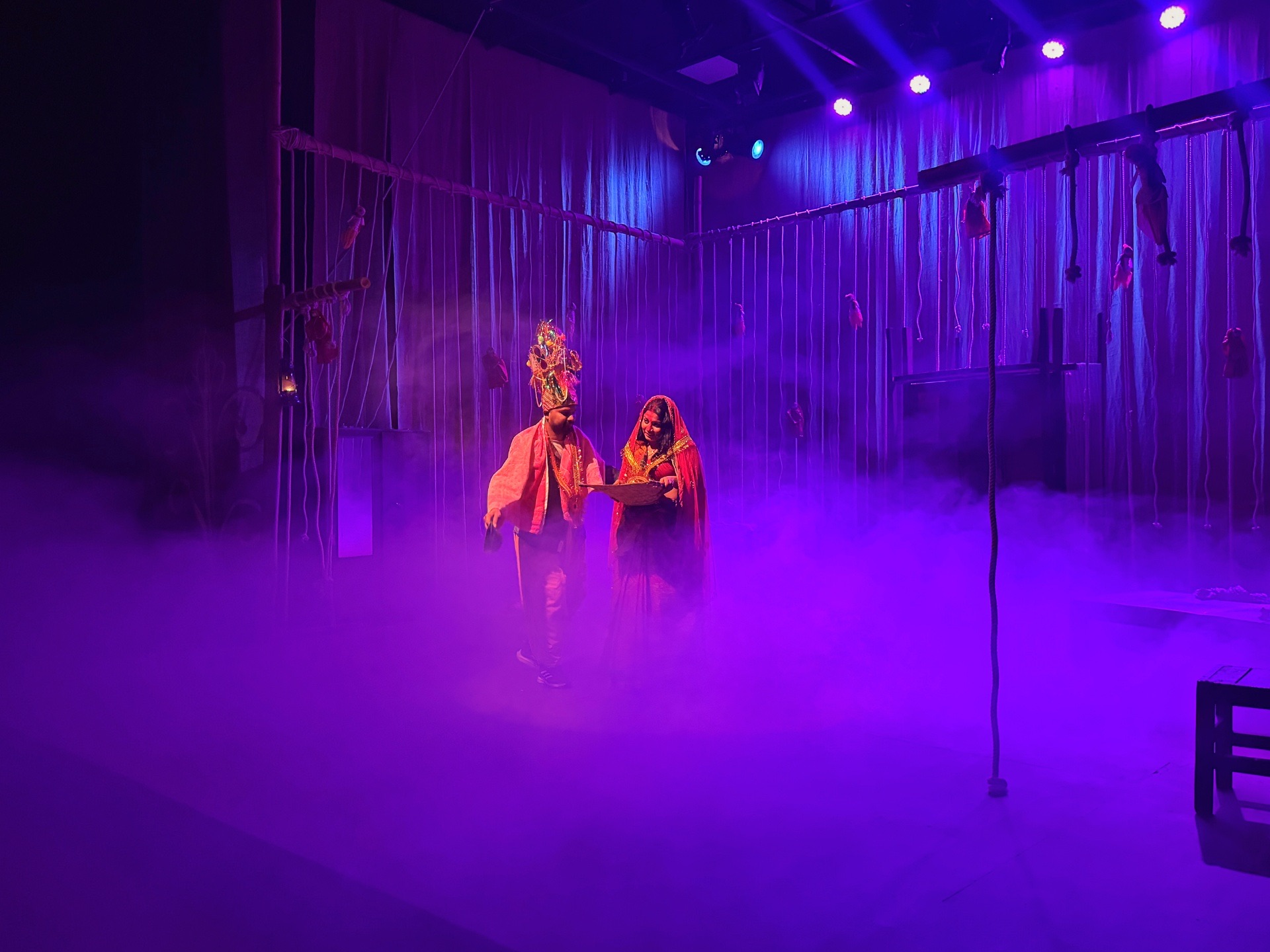
Kathmandu. Jute ropes were suspended everywhere around the stage, and Kathputali puppets softly swayed on the ropes. The walls on either side of the stage resembled traditionally painted mud houses of the Madhesh. “Bahuriya”, staged at Mandala Theatre, opened with a disturbing scene: a man was lying on the floor, with his hands and feet bound with thick jute rope, similar to those hanging around. He was being thrashed brutally by an invisible hand. From the very beginning, the play made its position clear: people are often trapped not only by others but by the weight of society itself.
A woman then entered, her face covered with a ghunghat. She was his wife. The narrative unfolded slowly and with tension. The husband had disappeared shortly after marriage, and he was finally home. His wife, incomplete and inferior, waited for four years. The husband confessed that he was too young to talk when his father arranged the marriage, and he never wanted to live with his wife.
The societies in Dehaat, rural Madhesh, are completely different from urban Kathmandu. Marriage is rarely a personal choice and often a major social contract between the two families. Parents fix marriages, dowry is discussed as a business transaction, and there are situations when the bride and groom only get to see each other on the wedding night. Once married, the world of the bride usually becomes her husband and his household. Social norms silence dreams, freedom, and personal voice.
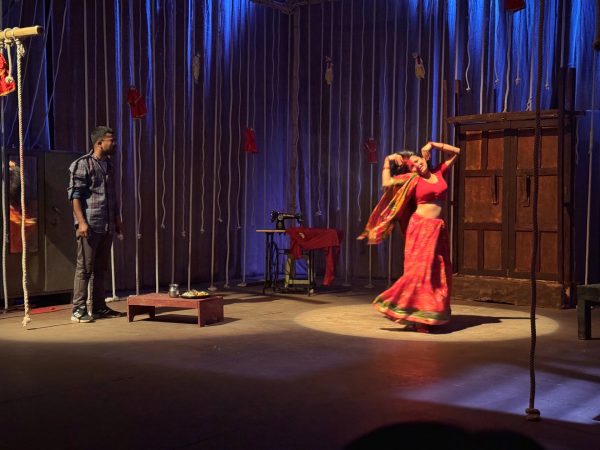
Bahuriya reveals this fact with sincerity. These meanings were amplified by the stage design. Among the many Kathputali dolls, two dolls were inside the house, which represented the husband and wife, and another female doll was hanging outside, which probably suggested individual desires, dreams, or freedom of choice.
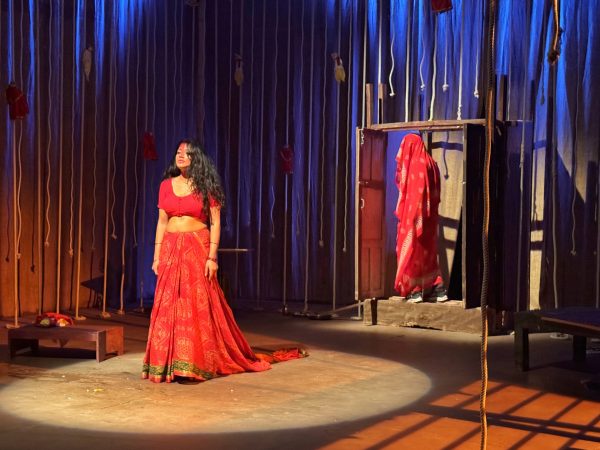
The narrative develops in three main turns. To start with, the husband confessed that he had an affair in the city. The wife danced in pain and attempted to reshape herself to his desires. The eyes of the audience kept staring at the female doll hung outside the house.
Moments later, the husband again asserted that the affair was a hoax, a lie to free him from his household, and to pursue his career ambitions. The wife compares her situation with Ram abandoning Sita. She shouts, “Ram, who left Sita?” This is a bitter reality. Hindu women usually compare their marriage and relationship with Ramayana’s Ram and Sita, however it was the very Lord Ram who banished Sita to the forest due to intense public questioning of her purity following her captivity by Ravana.
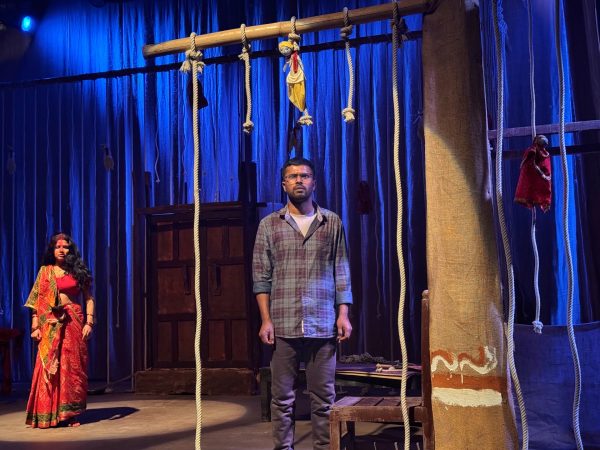
At last, the husband reached a final decision. The wife fed him bread with her own hands for one last time. She gifted him the shirt she had stitched. She then took off her bangles and mangalsutra, the outward signs of her married status, and placed them on her husband’s hand. The third twist took place when the wife took a saree out of the almirah and wrapped it around the husband before letting him go. The audience stared at the female doll that hung behind the walls, hidden behind the male doll. The wall now appeared as a mask to the husband’s identity.
The saree, as a symbol of feminine identity, was now draped over a man, obscuring strict gender dichotomies and foreshadowing the realities of identity and expression, such as LBT (lesbian, bisexual, transgender) identities that Nepali society tends to be silent about.
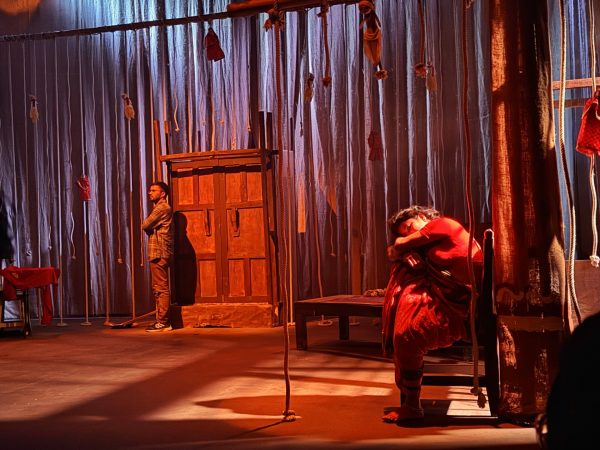
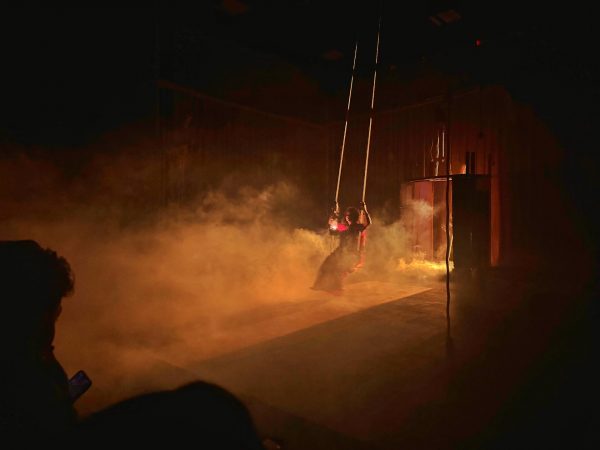
The conclusion is silent. The wife leaves the house with a lantern, reaches a big tree, and sits in a rope swing, swinging back and forth. In the rural context, a swing is a symbol of childhood, festivals, and pure joy. However, in this case, the swinging movement may have linkages to confusion or a liminal state between life and death.
The ambiguity leaves the audience room to ponder well after the performance.
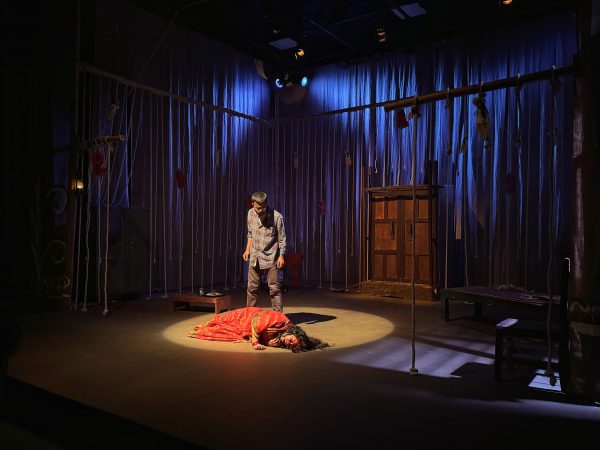
In the end, “Bahuriya” was effective due to its restraint and clarity. With just two performers on stage, Bahuriya was never loud. It gave the audience time to reflect. It not only limited itself to the terai, but also sought to question the broader injustices of gender, marriage, and identity across Nepali society. Creative Director Sarita Giri carefully planned the use of sounds, colors, light, and mist. The writing, direction, and performance by Suraj Yadhav (husband on stage) as well as the performance by Prashamsa Shiwakoti (wife on stage) were both exceptional. The collective effort of the entire team made Bahuriya a thoughtful and unsettling theatrical experience.
Facebook Comment
Related News






latest Video
Trending News
- This Week
- This Month