
The Making and Breaking of Gods: How Atiranjan ko Manoranjan Reflects Nepal’s Politics of Belief
In Nepali politics, leadership is often shaped by collective hope, where individuals are quickly elevated through public belief into larger-than-life figures, only to be just as quickly questioned, reshaped, or abandoned when expectations fail to hold.

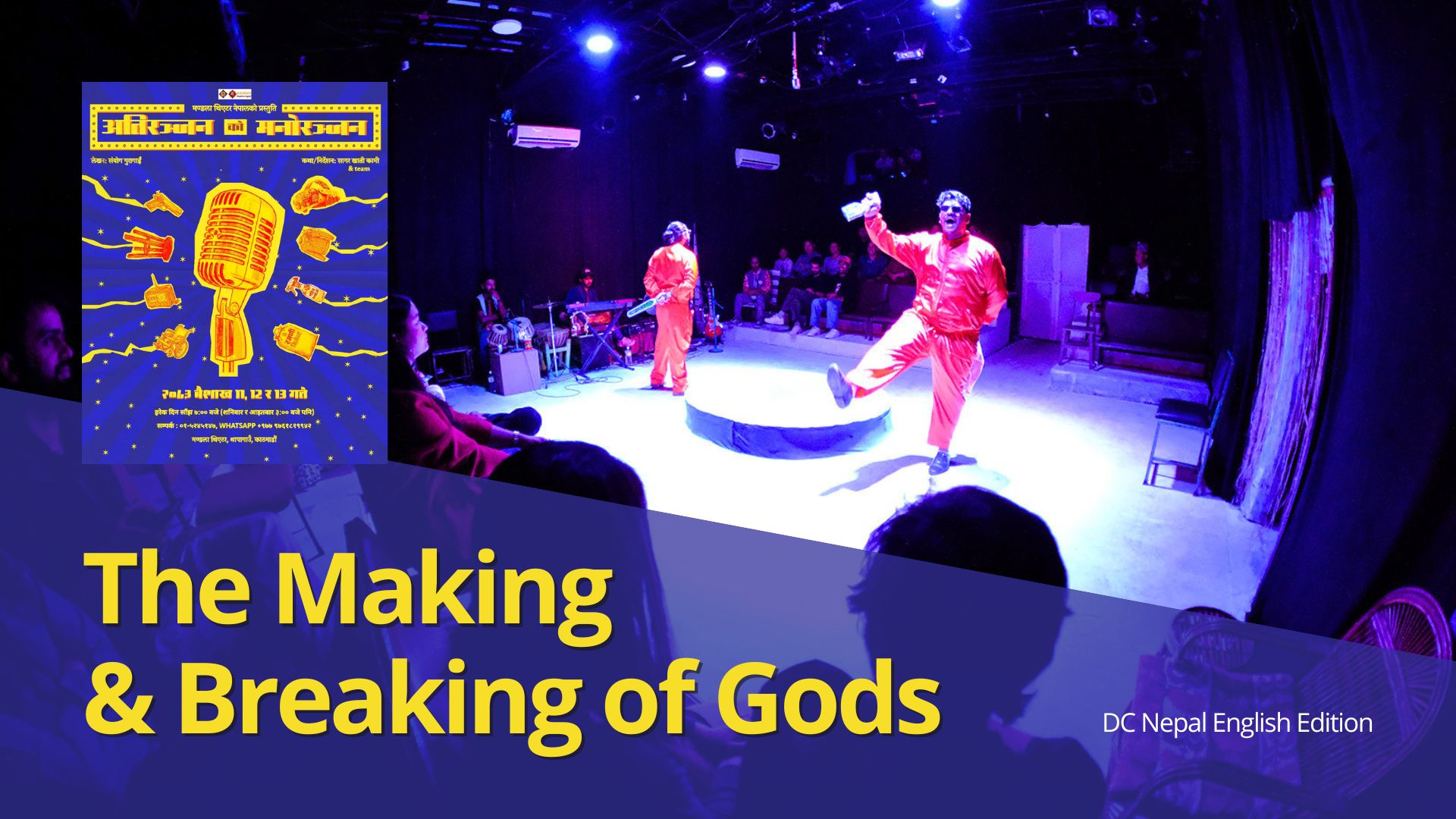
Kathmandu. Unlike most plays, Atiranjan ko Manoranjan does not wait for the curtain to rise. It begins at the gate. Characters move through the queue, casually talking, observing, even judging the audience. By the time one finds a seat, it already feels like we have unknowingly entered the performance.
Inside, the stage sits at the centre, surrounded by chairs. There is no safe corner to sit and “just watch.” Everyone is visible. Everyone is involved. Each audience member is handed a flyer with song lyrics. When the music starts, people begin to sing together. It feels like a concert, but also something slightly uncomfortable, because slowly, it becomes clear that we are not just the audience, we are the subject.

The play gathers a mix of characters, different ages, different attitudes, different social positions. Yet they all share one thing: they are fans of a superstar called “Ocean DAS.” They have come with excitement, with expectation, and perhaps with a little too much faith. The mood is lively, almost festive. It feels very familiar, like any public gathering in Nepal where hope is in the air and logic quietly takes a back seat.
Ocean DAS enters like a star. At one point, wearing a cheetah mask, he becomes larger than life, half performer, half superhero, fully created by the people around him. And that is where the play becomes sharply satirical. Because Ocean DAS is not just a singer. He begins to look very much like the many “leaders” Nepal has seen, those who promise everything, deliver little, but still manage to hold attention.
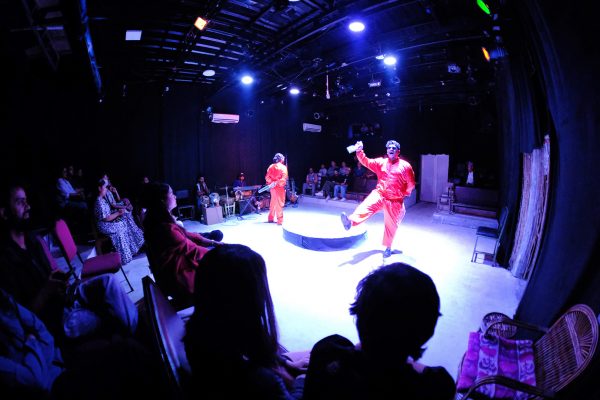
The name itself is clever. “DAS,” meaning servant. But here, the roles reverse. Instead of serving the people, he gathers followers who slowly become his own “das.” The crowd stops questioning. Songs turn into slogans, and slogans slowly turn into belief. At one point, it becomes hard to tell whether people came for entertainment or for devotion.
The play does not hold back in showing how quickly loyalty shifts. The same crowd that cheers also doubts. The same supporters who build him up are the first to step back when cracks appear. Even his own circle, his uncle, his close supporters, quietly move away. It feels funny at first, almost exaggerated. But then it starts to feel very real.

A symbolic character carrying a flag marked “justice” appears, only to be defeated by Ocean DAS. The moment is both comic and uncomfortable. It shows how easily powerful words can be pushed aside when performance becomes more convincing than reality.
And then comes the fall. The superhero image collapses. The same Ocean DAS, once celebrated, is stripped of everything, left nearly naked on stage. It is not played for shock, but for meaning. The image is simple: when the performance ends, what remains? Not a leader, not a star, just a person, exposed, confused, and filled with guilt. At one point, he questions his own worth, even as a son.
As he breaks down, the crowd loses its energy. The singing stops. The excitement fades. What remains is silence, and a strange emptiness. It mirrors a familiar cycle: build someone up, believe in them fully, and then quietly move on when the illusion breaks.
Yet the play does not leave the audience completely hopeless. A small thread of hope appears towards the end. Not loud, not dramatic, but enough to suggest that reflection is still possible.

What makes Atiranjan ko Manoranjan stand out is not just its message, but its form. It is playful, satirical, and at times deliberately confusing, but always engaging. The humour works because it feels close to reality. The satire works because it does not need to exaggerate too much. And the participation, making the audience sing, react, and sit within the performance, makes the experience personal.
The entire team deserves strong appreciation for pulling off such a complex and risky production. The direction by Sagar Khati Kami and team feels confident and controlled, even within an experimental format. The writing, music, and performances come together smoothly, never losing the audience’s attention. The large ensemble on stage handles the shifting tones, comic, chaotic, and reflective, with impressive ease. Managing participation, satire, and narrative at the same time is not simple, but the team does it with clarity and energy.
Atiranjan ko Manoranjan is entertaining, but it is also quietly sharp. It makes people laugh, but also makes them uncomfortable in the right way. And as the audience walks out, after singing, watching, and being part of the play, one question remains: in a society like ours, are we just watching the show, or are we helping to create it?
Facebook Comment
Related News



latest Video
Trending News
- This Week
- This Month