
After +2 in Nepal: Between Dreams, Pressure, and Real Decisions

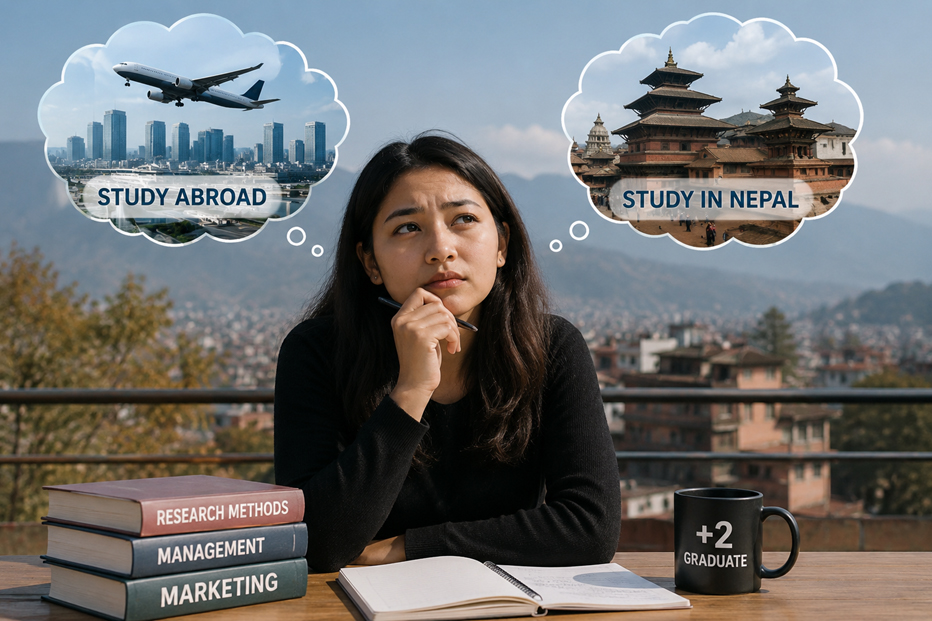
There is a moment that almost every +2 graduate in Nepal experiences deeply, even if no one talks about it openly. It is that sudden transition where life after high school does not feel like a celebration or a fresh beginning, but instead feels like an immediate shift into responsibility, expectations and quiet pressure about what comes next. One phase ends, but almost instantly another begins, and this new phase is filled with questions that feel bigger than the students themselves.
Almost overnight, normal conversations start turning into serious discussions about the future. Suddenly, everyone wants to know about their future plans. Relatives begin asking questions at family gatherings. Friends either start preparing for Nepal’s bachelor entrance exams or take the next step toward studying abroad, often posting IELTS or PTE scores on social media. Parents quietly worry about what comes next, even if they do not always express it directly.
And somewhere in the middle of all that noise, students are simply trying to figure out one honest question: “What do I actually want for my future?”
After +2, students are expected to make decisions that may shape the next ten or even twenty years of their life. At 17 or 18 years old, that pressure can feel incredibly big and heavy, especially when there is comparison coming from every direction. Some students already seem confident about their path. Some know exactly what course they want to study. Some are preparing to go abroad. Some are planning to stay in Nepal. And many others are still confused but afraid to admit it openly.
This article is not here to tell students that one path is better than another. It is also not here to sell unrealistic dreams. It is simply here to talk honestly about the decisions students and families face after +2, as real guidance matters more than pressure during this stage of life.
The Real Challenge After +2
One of the biggest misconceptions people have is believing that students struggle because they do not have enough opportunities.
In reality, students in Nepal today have more opportunities than ever before. The actual problem is something else entirely. Too many decisions, too much pressure, and not enough honest conversation.
Many students end up choosing courses because their friends are also choosing them. Some believe in going with the flow. Some select countries based on social media trends rather than proper research. Others follow family pressure without truly understanding whether the field actually suits their interests or personality.
And when decisions are made from pressure instead of clarity, students often struggle later in life emotionally, academically, or financially. This is why students need time to think properly before rushing into decisions immediately after +2.
Understanding Different Career Paths
Every stream today has opportunities if students genuinely understand their strengths and interests.
Science students often consider fields like medicine, engineering, information technology, data science, biotechnology, nursing, pharmacy, or research-based careers. These fields can provide strong long-term opportunities, but they also require commitment, patience, and genuine interest. Students should not choose science-related careers simply because society considers them renowned.
Management students now have access to a huge range of growing industries. Business administration, accounting, finance, marketing, entrepreneurship, digital marketing, hospitality management, international business, and corporate management are all fields with expanding opportunities both inside Nepal and internationally.
Students from humanities and arts backgrounds also have strong future possibilities, even though these streams are often underestimated in South Asian societies. Journalism, psychology, sociology, media studies, international relations, content creation, filmmaking, literature, design, and public communication are becoming increasingly valuable in today’s world.
Similarly, hotel management and hospitality education have become major career choices for many students. Hospitality today is connected not only to hotels, but also tourism, aviation, event management, luxury services, customer experience, and international business environments. Students who enjoy communication, networking, and dynamic work environments often perform extremely well in this field.
The important thing students must remember is that no field is “small” anymore if you are genuinely skilled and committed to it.
The Big Question: Nepal or Abroad?
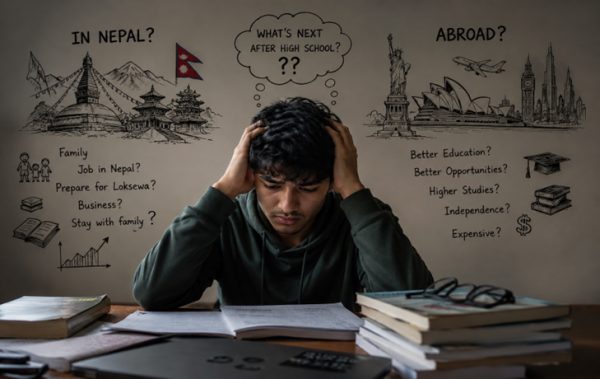
This is probably the biggest conversation happening in many Nepali households today. Should students stay in Nepal for further studies, or should they go abroad? The honest answer is that both options can work well depending on the student.
Staying in Nepal
Nepal is changing rapidly. Opportunities in sectors like technology, media, business, tourism, entrepreneurship, finance, and healthcare are growing every year. Students who stay focused, disciplined, and academically committed can absolutely build strong and respected careers while studying in Nepal.
Along with academic growth, there are also practical advantages. Staying in Nepal means students remain close to their family support system, which often plays a major role during important decision-making years. Financially, it is also more manageable as education and living costs are significantly lower compared to studying abroad.
Another important factor is familiarity. Studying in a known environment reduces cultural and emotional adjustment challenges, allowing students to concentrate more on learning and skill-building rather than adapting to a completely new system.
In addition, Nepal is gradually seeing growth in startups, digital industries, remote work opportunities, and international collaborations. This means students are no longer limited to traditional career paths and can explore modern, skill-based professions even while staying in the country.
For many families, this path offers a balanced approach: stability, affordability, and the opportunity for students to grow professionally without stepping away from their roots.
Going Abroad
At the same time, studying abroad offers a completely different kind of exposure.
Students experience new academic systems, international cultures, independent living, and professional environments that can shape them in powerful ways. Many students become significantly more confident, mature, and independent after moving abroad.
Countries like Australia, Canada, the UK, the USA and several European destinations continue to attract Nepali students because of educational opportunities, international exposure, and post-study work options.
However, students and parents also need to understand the reality behind foreign education. Living abroad at a young age is not emotionally easy. Most Nepali students grow up in close family environments where emotional support is constant. Then suddenly, they move thousands of kilometers away from home and must manage everything independently for the first time.
Cooking, paying rent, attending classes, working part-time jobs, managing assignments, missing festivals back home and dealing with loneliness all become part of everyday life. Homesickness becomes very real for many students. Some students adjust quickly. Others take time. Some silently struggle while trying not to worry their family back home.
And honestly, that adjustment phase is something students should mentally prepare for before making the move.

Going Abroad After +2 vs After Bachelor’s
This is another important conversation that Nepalese families often have.
Students who decide to go abroad after +2 usually adapt more naturally over time because they are younger and still growing personally. By the time they complete their degree, they often have a better understanding of the local education system, lifestyle, and sometimes even early exposure to internships, part-time work, and professional networks.
On the other hand, students who complete their bachelor’s degree in Nepal first often go abroad with more academic maturity and clearer career direction. With a stronger foundation in their chosen field, they generally make more focused decisions when pursuing higher studies abroad.
However, one practical reality that many students later discover is that foreign job markets often prioritize local qualifications and local experience. This means students arriving abroad for master’s studies sometimes still begin from entry-level positions while adjusting to the professional system there.
Neither path is automatically right or wrong.
What only matters is choosing the path that genuinely fits the student’s goals, financial situation, maturity level, and long-term plans.
A Message to Parents and Guardians
Every parent naturally wants the best possible future for their children. That concern always comes from love, and most children understand and respect that.
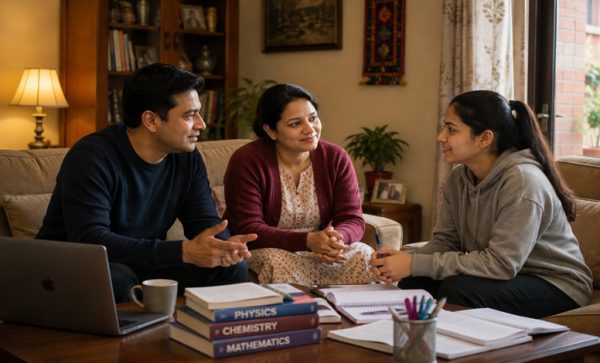
However, during this stage of life, what students need most is guidance not pressure. Sometimes, they simply need a calm space where they can express confusion and be heard instead of being compared or judged too quickly. Not every student grows at the same pace, and not every successful journey looks the same.
It is also important to remember that decisions made under pressure or comparison can often lead to regret later. Choices should not be shaped only by the opinions of relatives, friends, neighbors, or social media trends. Every student has a different personality, learning style, and future potential.
Some students thrive and perform better abroad, while others do far better when they stay closer to home. Some are ready to take big steps immediately, while others may need more time to explore and understand themselves, and that is completely normal.
In this process, proper research plays a key role. Parents are encouraged to actively participate in helping their children explore the right academic pathways, whether that means identifying quality colleges and universities within Nepal that offer strong education or carefully planning a study abroad journey through verified, registered, and trusted guidance sources. In a time where information is everywhere and not always reliable, making informed decisions with the right support becomes even more important.
The most supportive approach a family can take is to make decisions together, research together, ask honest questions together, and evaluate options based on reality not fear or comparison.
When understanding replaces pressure, students make clearer decisions and build more confident futures.
Something to Keep in Mind
After high school, it is completely normal to feel confused, pressured, uncertain or even scared about what comes next. This is one of the most sensitive phases of life, where students are standing between adolescence and adulthood while being asked to make some of the most important decisions of their journey so far.
But here is something important to hold on to: you do not need to have your entire life figured out right now.
What matters more is clarity in the present moment. Being honest with yourself, understanding your options properly, doing genuine research, and building the emotional readiness to move forward step by step. Decisions made in this phase should be guided by awareness, not panic.
Whether you choose to stay in Nepal or go abroad, and whether your path leads you to science, management, humanities, IT, hospitality, or any other field, long-term success is shaped far more by consistency, adaptability, and effort than by trends, pressure, or comparison. Give yourself time. Ask questions. Explore properly before committing.
Because the right decision after +2 is not the one shaped by outside pressure, comparison, or expectations from others. It is the one that comes from understanding yourself clearly, recognizing your own goals, and choosing a path that genuinely aligns with the kind of future you want to build. A decision grounded in patience, awareness, and purpose will always be more meaningful and sustainable than one made just to follow what others are doing.
Managing Director / Senior Advisor
-Goreto Educational Consultancy
Facebook Comment
Related News
latest Video
Trending News
- This Week
- This Month