
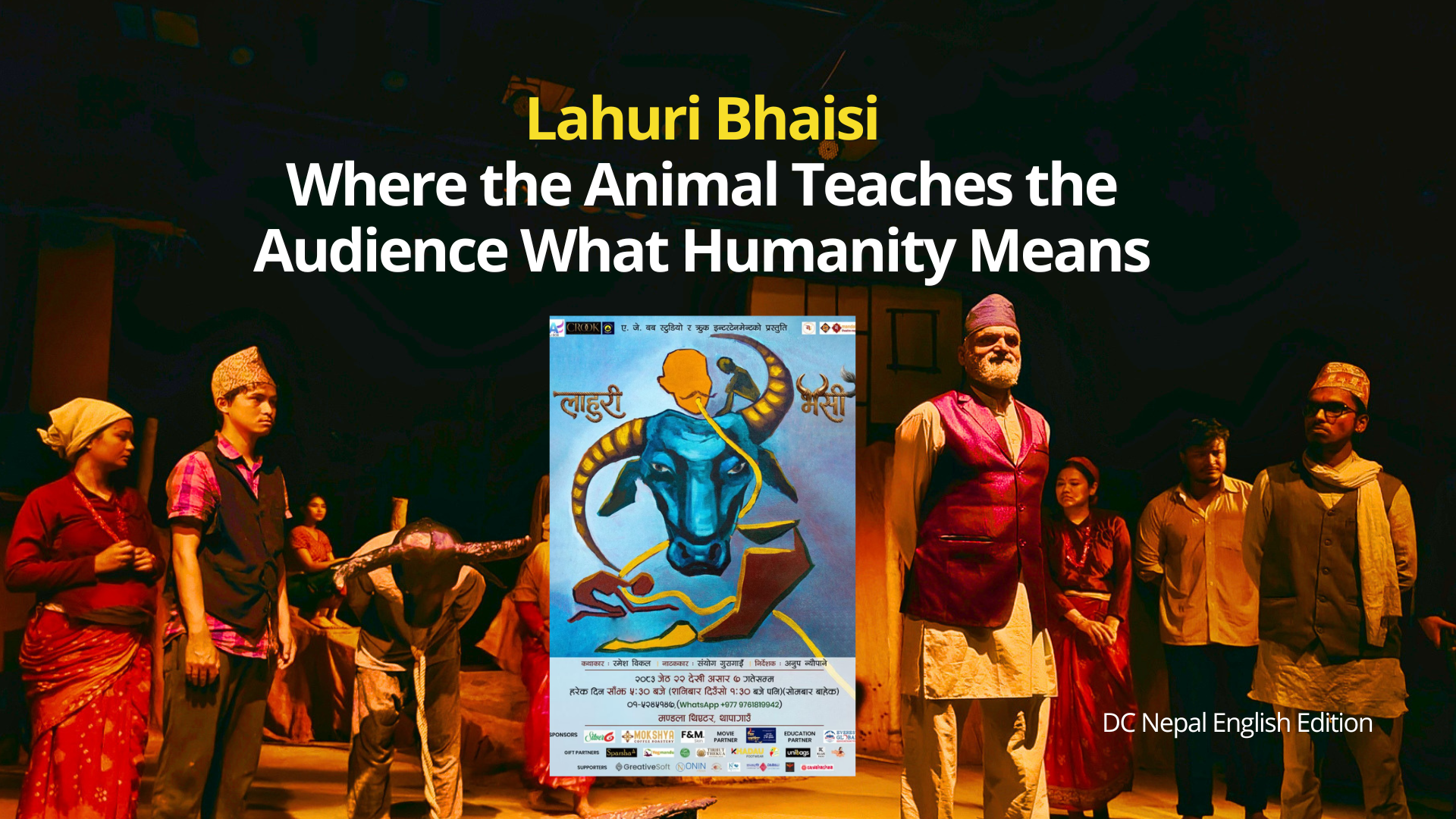
Lahuri Bhaisi: Where the Animal Teaches the Audience What Humanity Means
The stage itself is already a map of class. Before a single word is spoken, the hierarchy is built into the architecture of the set, and it never lets you forget it.

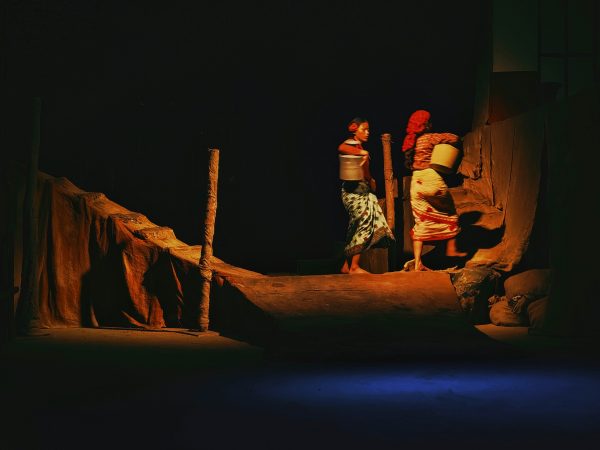
Kathmandu. The play begins in darkness, and the darkness is already telling a story.
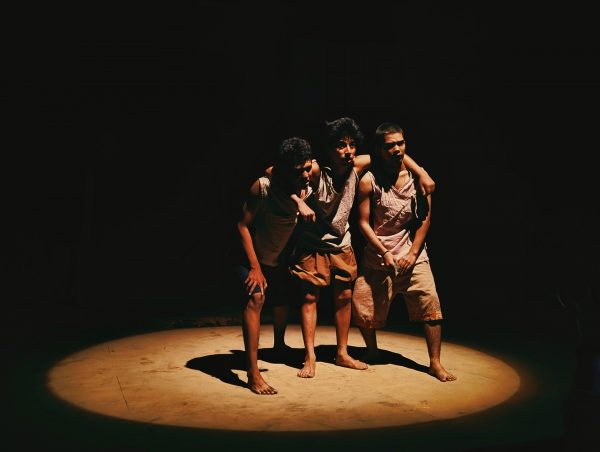
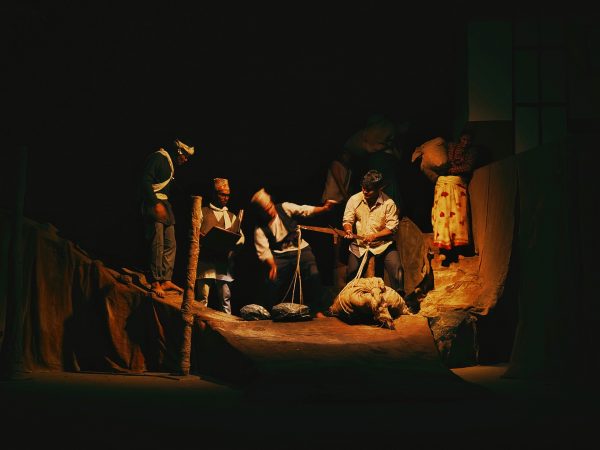
Before a single line of dialogue is spoken, bodies move across the stage in the repetitive rhythms of agricultural labour; bent backs, hurried footsteps, coordinated movements emerging from shadow. The scene evokes Nepal’s long history of agrarian bondage: Kamaiya, Haruwa, Charuwa. This is not the atmosphere. It is a social introduction, a way of telling the audience that the world they are about to enter is not a world that was invented for the stage. The struggle existed before the story began, and will continue long after it ends.
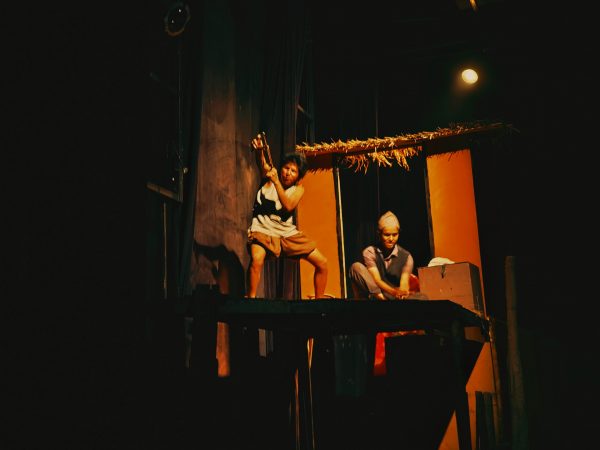
When the lights turn on, the set makes its main argument. On the right, elevated, stands the Jimindaar’s house. On the left, noticeably lower, the home of Likhure and his family. Below both lies the ground where labourers work. A narrow hillside trail connects them. From a visual anthropological perspective, this is not set design, it is a map of power. Those who own stand above. Those who dream occupy the middle. Those who labour remain below. The trail does not suggest equality. In rural societies, the poor often live close to authority while remaining socially and economically distant from it.
Even the names carry meaning. Likhure; lean, powerless, not worth much. Ghainti. The play does not ask you to overlook these. It asks you to sit with them. His dream appears modest: to purchase a Lahuri Bhaisi, a buffalo known for exceptional milk yield. Within the village economy, however, this animal becomes something far larger than livestock. It is economic independence. It is the fragile act of refusing dependency.
What follows is one of the production’s most astute social observations. Rather than solidarity, the community fractures. I found myself watching the crowd rather than the central characters. Whenever the landlord enters a scene, bodies reorganise. Postures shift. Attention redirects. And most strikingly, villagers begin echoing the landlord’s words back to Likhure. The transition is subtle but devastating. Authority does not arrive through force alone; it emerges through repetition, agreement, and performance. Power survives because people learn how to behave around it.
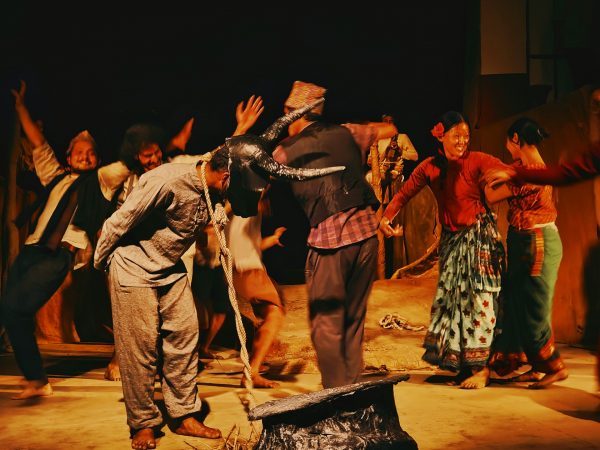
Religion weaves through with equal complexity. The communal bhajan sequence generates genuine warmth, one of the few spaces where emotional release remains possible for people trapped in cycles of labour and debt. Yet the play refuses sentimentality. Religious authority is quietly mobilised in support of the landlord’s campaign of doubt. The same communal life that offers workers their only genuine freedom is turned, carefully, against one of their own.
Then comes the moment the production earns most completely. At a point when no human being genuinely understands Likhure’s distress, the buffalo moves toward likhure and gently touches him. A simple gesture. Humans have failed at empathy. The animal succeeds. In that moment the buffalo ceases to be livestock and becomes witness, companion, perhaps counsellor. The scene quietly asks a difficult question: what does it mean when an animal becomes more humane than the people surrounding it?
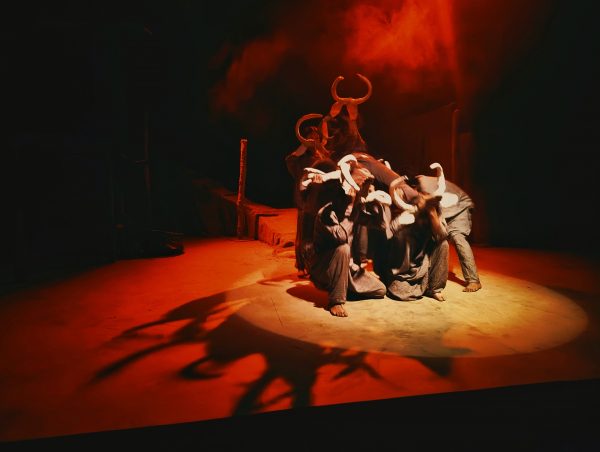
The dream sequence that follows is among the strongest theatrical achievements, red lighting, dramatic movement, and sound constructing Likhure’s psychological interior. Red carries multiple meanings here: emotional turmoil, social struggle, the leftist political traditions embedded in Nepal’s class discourse. The placement of Likhure’s house on the left of the stage deepens the suggestion. The production wisely leaves these meanings open rather than forcing a singular interpretation.
The live music deserves equal recognition. A sarangi-playing character appears within the story world itself, folk music not offered as decoration but woven into village life. The offstage ensemble of drums and traditional instruments does not accompany the narrative. It inhabits the same world, shifting alongside tension, joy, uncertainty, and loss.
And then the lights go out. The same bodies return. The same bent backs, the same hurried footsteps, the same rhythms of labour moving through darkness. The play closes exactly as it opened, and that circularity is not pessimism. It is precision. That is how systemic oppression works. It does not need dramatic confrontation. It needs only the quiet restoration of the original order. Nothing has changed. Everything has been confirmed.
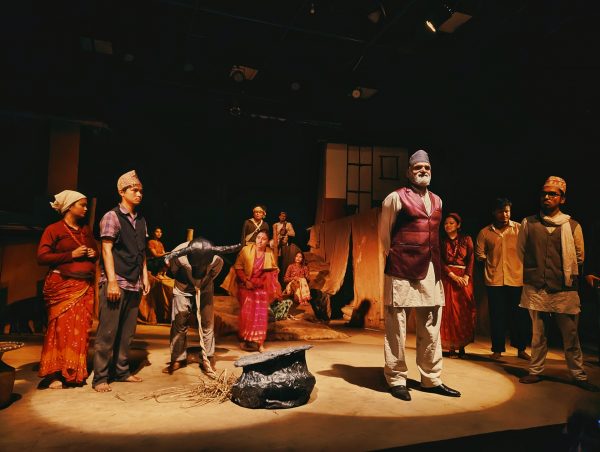
Ramesh Bikal, one of Nepal’s most celebrated short story writers, originally gave this story its political soul; a writer whose fiction consistently held a mirror to the lives of the rural poor and the structures that kept them there. Playwright Sanyog Guragain’s adaptation honours that inheritance faithfully, preserving Bikal’s moral intelligence while granting it full theatrical life. Director Anup Neupane and an ensemble of over twenty performers together build a living village rather than merely performing one.
Lahuri Bhaisi is a story about power, dependency, and the fragile possibility of dignity within unequal social systems. It is a story about who is permitted to dream, for how long, and at what cost. And ultimately, it is a story about empathy, who receives it, who withholds it, and how transformative it becomes when it finally arrives from the most unexpected place.
The darkness at the beginning was a warning. The darkness at the end is the answer.
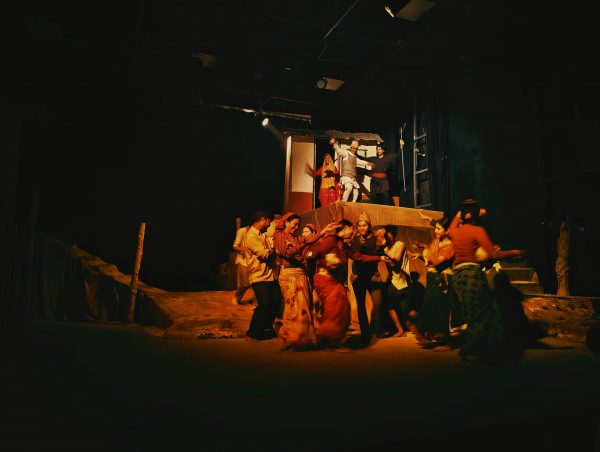
Lahuri Bhainsi runs at Mandala Theatre, Thapagaun, until Asadh 7 (June 21).
Facebook Comment
Related News



latest Video
Trending News
- This Week
- This Month