
Betrayal, Domination, and the Human Mind: Psychological Dimensions and Pathways to Resilience

Introduction
Human life is shaped not only by achievements and successes but also by experiences of disappointment, betrayal, domination, and broken trust. Throughout history, individuals have struggled with the psychological consequences of placing confidence in others only to discover that such trust was misplaced. These experiences often leave deep emotional and cognitive imprints, influencing how people perceive themselves, others, and the world around them. Understanding the psychological dimensions of betrayal and developing effective coping mechanisms are essential for maintaining mental well-being and fostering resilience.
The Psychology of Trust and Betrayal
Trust is a fundamental component of human relationships. Highlighting its fragility can make the audience feel the importance of safeguarding their emotional security and foster a sense of responsibility in maintaining trust.
The pain of betrayal is especially intense when it comes from people who are highly valued or deeply trusted, making the emotional impact more profound and compelling for readers.
Repeated experiences of betrayal may gradually change how people see the world, such as developing skepticism toward others or feeling emotionally exhausted and hopeless, which helps readers connect with the idea.
Social Influence and Psychological Manipulation
An understanding that external forces shape behavior can help the audience feel more in control of their actions and less guilty about external pressures.
Many people unknowingly become instruments of ideas or agendas that they do not fully understand. Psychological research demonstrates that conformity, obedience to authority, groupthink, and social conditioning can significantly influence decision-making processes. As a result, individuals may engage in actions that harm others without fully recognizing the consequences of their behavior.
This does not necessarily imply intentional malice. Rather, it highlights the complexity of human cognition and the extent to which external pressures may influence people. Understanding this dynamic can help explain why trusted individuals sometimes act in unexpected or harmful ways.
Psychological Consequences of Betrayal and Domination
The cumulative effects of betrayal, domination, manipulation, and repeated violations of trust can have profound and long-lasting consequences on an individual’s psychological well-being. While a single act of betrayal may cause temporary emotional pain, repeated experiences often reshape cognitive patterns, emotional responses, interpersonal relationships, and perceptions of reality. The human mind naturally seeks safety, predictability, and meaningful connections; when these foundations are repeatedly undermined, individuals may develop a range of psychological adaptations designed to protect them from future harm. Although these adaptations may initially serve as survival mechanisms, they can become barriers to emotional health and personal growth when they persist over time.
Loss of Trust
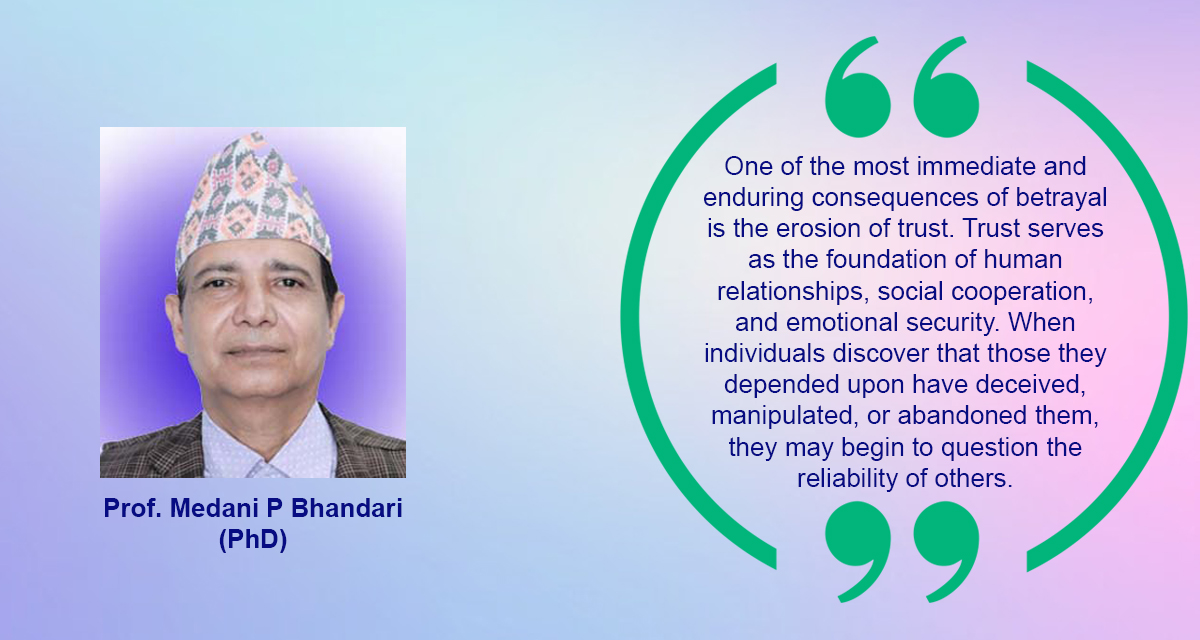
One of the most immediate and enduring consequences of betrayal is the erosion of trust. Trust serves as the foundation of human relationships, social cooperation, and emotional security. When individuals discover that those they depended upon have deceived, manipulated, or abandoned them, they may begin to question the reliability of others.
Over time, trust-related difficulties may extend beyond the original source of betrayal. Individuals may become suspicious of colleagues, friends, family members, institutions, or even society as a whole. They may constantly question others’ motives, search for hidden agendas, or assume that kindness is merely a disguise for future exploitation.
This loss of trust often creates a psychological paradox. While human beings require meaningful relationships for emotional well-being, fear of betrayal may prevent them from developing the very connections that could support healing. Consequently, individuals may experience loneliness, isolation, and difficulty forming healthy interpersonal relationships.
Hypervigilance and Constant Alertness
Repeated experiences of betrayal frequently lead to hypervigilance, a heightened state of psychological alertness characterized by constant monitoring of potential threats. The mind, having learned from painful experiences, attempts to prevent future harm by remaining continuously watchful.
Individuals experiencing hypervigilance often become highly sensitive to subtle changes in behavior, tone of voice, body language, or social dynamics. They may overanalyze conversations, interpret ambiguous situations as threatening, and anticipate rejection or deception even when no objective evidence exists.
Although hypervigilance may provide a temporary sense of protection, it comes at a significant psychological cost. Continuous alertness consumes mental energy, increases stress levels, and contributes to emotional exhaustion. Over time, it may impair concentration, reduce enjoyment of life, and create persistent feelings of anxiety and insecurity.
Emotional Withdrawal and Social Isolation
When trust has been repeatedly violated, many individuals adopt emotional withdrawal as a defensive strategy. Emotional withdrawal involves reducing vulnerability, limiting emotional expression, and avoiding situations that could result in disappointment or rejection.
Initially, withdrawal may provide temporary relief from emotional pain. By distancing themselves from potentially harmful relationships, individuals reduce opportunities for further betrayal. However, prolonged withdrawal often leads to unintended consequences.
Humans are inherently social beings who derive meaning, support, and belonging from interpersonal connections. Excessive withdrawal may diminish opportunities for intimacy, friendship, collaboration, and mutual support. Individuals may become increasingly isolated, creating a cycle in which loneliness reinforces emotional distancing, and emotional distancing deepens loneliness.
In some cases, individuals continue participating in social activities while remaining emotionally detached. They may appear engaged externally while internally maintaining psychological barriers that prevent genuine connection.
Reduced Self-Worth and Self-Blame
Betrayal frequently affects not only others’ perceptions but also one’s own. Many individuals attempt to make sense of painful experiences by searching for personal explanations. As a result, they may internalize responsibility for events largely beyond their control.
Victims of betrayal often ask themselves questions such as:
- “What did I do wrong?”
- “Why was I not valued?”
- “Why was I treated this way?”
- “Am I somehow inadequate?”
Such self-questioning may gradually evolve into diminished self-esteem and reduced self-worth. Individuals may begin to believe that they deserved mistreatment or that they lack qualities necessary for healthy relationships.
Psychologically, this tendency reflects the human desire to create order and meaning from painful experiences. Unfortunately, self-blame often intensifies suffering rather than alleviating it. It shifts attention away from the actions and choices of those responsible and directs criticism inward.
Over time, reduced self-worth may undermine confidence, limit aspirations, and discourage individuals from pursuing opportunities or relationships that could contribute to their personal growth.
Cynicism and Pessimism
Repeated disappointments can profoundly influence an individual’s worldview. When experiences of betrayal accumulate, people may begin to develop cynical assumptions about human nature and social relationships.
Cynicism often manifests as the belief that most people are selfish, dishonest, manipulative, or motivated primarily by personal gain. Individuals may lose faith in concepts such as loyalty, integrity, fairness, and compassion. This worldview can create emotional distance and reinforce mistrust.
Similarly, pessimism may emerge regarding future relationships and life circumstances. Individuals may assume that future experiences will replicate past disappointments, leading them to expect failure, rejection, or betrayal before events even occur.
While a certain degree of caution may be reasonable, excessive cynicism and pessimism can become self-fulfilling prophecies. Negative expectations may discourage individuals from pursuing meaningful opportunities, building new relationships, or recognizing genuine acts of kindness and support.
Identity Disturbance and Existential Questioning
In severe or prolonged cases, betrayal may challenge an individual’s sense of identity and purpose. People often construct their self-understanding through relationships, values, and social roles. When trusted individuals violate deeply held expectations, fundamental assumptions about life and human nature may be shaken.
This disruption may lead to existential questions concerning meaning, justice, morality, and the reliability of human relationships. Individuals may struggle to reconcile their previous beliefs with their lived experiences.
Although such questioning can be painful, it may also create opportunities for personal transformation. Through reflection and growth, individuals may develop more mature, realistic, and resilient perspectives on human nature and social relationships.
Psychological Adaptation and the Need for Healing
It is important to recognize that these psychological responses are not signs of weakness. Rather, they represent adaptive mechanisms developed by the mind in response to perceived threats and emotional injuries. The human psyche naturally seeks protection from future harm.
However, when these protective mechanisms become chronic, they may limit personal growth, emotional well-being, and relational fulfillment. What initially serves as protection can eventually become a psychological prison.
Healing begins when individuals acknowledge their experiences without allowing those experiences to define their identity. Through self-awareness, emotional processing, supportive relationships, resilience-building practices, and purposeful engagement with life, individuals can gradually transform pain into wisdom and vulnerability into strength.
The ultimate goal is not to eliminate all caution or forget past betrayals. Rather, it is to develop the capacity to trust wisely, maintain healthy boundaries, and continue engaging with life without being controlled by the wounds of the past.
Understanding Human Limitations
One of the most important psychological insights is recognizing that others’ actions often reflect their own fears, insecurities, ambitions, biases, and limitations. Human beings are imperfect decision-makers. Personal experiences, social pressures, emotions, and cognitive biases influence their judgments.
Recognizing these limitations does not justify harmful behavior. However, it enables individuals to understand that betrayal often reveals more about the betrayer than about the person betrayed. This realization can reduce self-blame and promote emotional healing.
Pathways to Overcoming Betrayal and Psychological Distress
Although betrayal and domination can leave lasting emotional scars, psychological research demonstrates that individuals possess remarkable capacities for healing and resilience. Several strategies can facilitate recovery.
Developing Self-Awareness
Self-awareness is crucial for resilience because it helps individuals recognize their emotions clearly, enabling them to process experiences like betrayal without becoming overwhelmed, thus supporting emotional recovery.
Building Emotional Resilience
Resilience is the ability to adapt and recover from adversity. It involves accepting painful experiences while refusing to allow them to define one’s identity or future. Resilient individuals transform suffering into learning and growth.
Establishing Healthy Boundaries
Healthy boundaries protect individuals from exploitation while preserving their dignity and self-respect. Boundaries enable people to maintain relationships without sacrificing their emotional well-being.
Practicing Forgiveness Without Forgetting
Forgiveness is often misunderstood. It does not mean excusing harmful behavior or abandoning accountability. Rather, it involves releasing the emotional burden of resentment while retaining the wisdom gained from experience.
Cultivating Meaning and Purpose
Individuals who find meaning in adversity often recover more effectively from psychological distress. Difficult experiences can become sources of wisdom, empathy, compassion, and personal development.
Maintaining a Supportive Community
Positive relationships provide emotional support, encouragement, and perspective. Building connections with trustworthy individuals helps restore confidence in human relationships and reduces feelings of isolation.
Focusing on Personal Growth
The most effective response to betrayal is often continued personal growth. Investing in education, creativity, service, spirituality, and meaningful goals shifts attention away from past wounds and toward future possibilities.
Conclusion
Betrayal, domination, and broken trust are among the most challenging aspects of the human experience. Their psychological effects can be profound, influencing emotions, relationships, and perceptions of the world. Yet adversity does not have to result in bitterness or despair.
The human mind possesses extraordinary capacities for reflection, adaptation, and transformation. By developing self-awareness, resilience, healthy boundaries, compassion, and a sense of purpose, individuals can overcome the psychological burdens associated with betrayal and emerge stronger, wiser, and more emotionally balanced.
Ultimately, the greatest victory is not avoiding all disappointments—an impossible task—but preserving one’s humanity, integrity, and commitment to growth despite them. In this way, suffering becomes a source of wisdom, and adversity becomes a pathway toward a deeper understanding of both self and society.
The psychological wounds created by betrayal, domination, and manipulation can leave lasting impressions on the human mind. Yet these experiences need not determine an individual’s future. Human beings possess a remarkable capacity for resilience, adaptation, and transformation. While pain may alter perspectives, it can also deepen wisdom, strengthen self-awareness, and foster emotional maturity. The challenge lies not in avoiding all forms of disappointment—an impossible task in human life—but in developing the inner strength to respond constructively. By embracing reflection, maintaining personal integrity, cultivating meaningful relationships, and pursuing a purposeful life, individuals can transform adversity into a source of growth. Ultimately, the most profound victory is not overcoming others but overcoming the psychological limitations that suffering attempts to impose. Through this process, individuals discover that true strength emerges not from domination or control, but from wisdom, compassion, self-respect, and the courage to continue moving forward despite life’s inevitable challenges.
Facebook Comment
Related News




latest Video
Trending News
- This Week
- This Month