
Observers Warn Nepal’s Democracy Is Undermined by Growing Parliamentary Confrontation

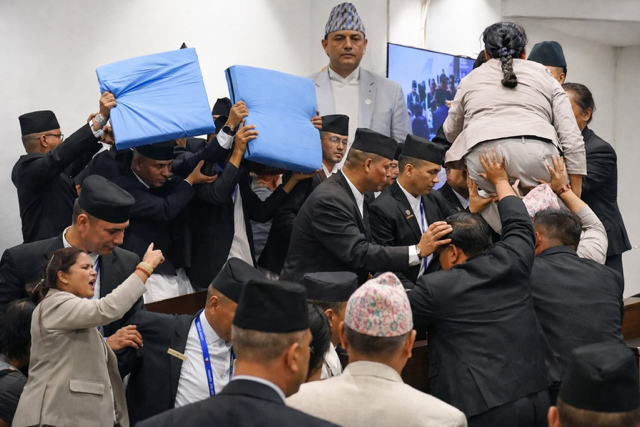
KATHMANDU — Observers of Nepal’s politics, both domestic and international, are urging opposition lawmakers to abandon escalating physical confrontations inside the Federal Parliament, warning that such behavior undermines democratic norms and erodes public trust in the country’s institutions. They argue that elected representatives must listen to differing views, respect parliamentary procedure, and stop treating the chamber as a battleground for displays of political machismo. Instead, they insist, national debates must be resolved through ideas, discipline, and dignified dialogue.
The appeal comes amid a series of disorderly incidents that have raised questions about the direction of Nepal’s parliamentary culture. Recent sessions have been disrupted by shouting, physical challenges to the Speaker, and confrontations with security marshals — scenes that analysts say are incompatible with the expectations of a maturing democracy. For many observers, the true strength of a democratic institution lies not in force or theatrics but in reasoned debate and the willingness to hear opposing arguments.
This is not the first time Nepal’s legislative spaces have struggled with decorum. The country’s political history records several dramatic episodes, including a well known incident prior to 2030 BS, when Ang Dandi Lama, a Rashtriya Panchayat member from Solukhumbu, hurled a chair toward Prime Minister Kirti Nidhi Bista during a heated exchange. The Speaker immediately suspended Lama for violating the dignity of the chamber, though he later regained his seat after receiving royal amnesty. The episode remains a reminder that the tension between protest culture and parliamentary discipline has persisted across political systems — from the Panchayat era to the present federal republic.
Analysts say Nepal’s leaders must now rise above this legacy. They argue that Members of Parliament have a responsibility to demonstrate maturity by respecting procedure, listening to dissenting voices, and expressing disagreement through democratic means rather than physical confrontation. Parliamentary chambers, they note, are designed to be forums of national decision making, not arenas of agitation. When lawmakers resort to disruptive behavior, they weaken institutional credibility, delay legislative work, and diminish public confidence in the political process.
Nepal’s democracy has reached a stage where citizens expect higher standards of conduct from their representatives. Political actors, observers say, must reflect on their own behavior and recognize that their actions inside Parliament set the tone for the entire democratic system. Constructive debate, disciplined participation, and respect for the Speaker’s authority are essential to strengthening the institution and ensuring that disagreements are resolved through ideas rather than aggression.
The message from observers is clear: Nepal’s Parliament must embody the principles of democratic dialogue. Lawmakers must debate with conviction, dissent with dignity, and uphold the decorum that the institution demands. Only then can Nepal’s political system earn the confidence of its citizens and the respect of the international community.
Facebook Comment
Related News



latest Video
Trending News
- This Week
- This Month