
Fear of Consequences in Nepal

It is often said that Nepalese resist change. I used to believe that, too. But listening to everyday conversations, it becomes clear that this is not entirely true. People are not afraid of change itself. They are afraid of the uncertainty and discomfort that comes with it.
You hear it in tea shops, on crowded buses, and in casual chats with neighbors. Everyone talks about wanting a better system, a more organized city, and leaders who actually deliver. The desire for progress is real alongside; frustration with stagnation is everywhere.
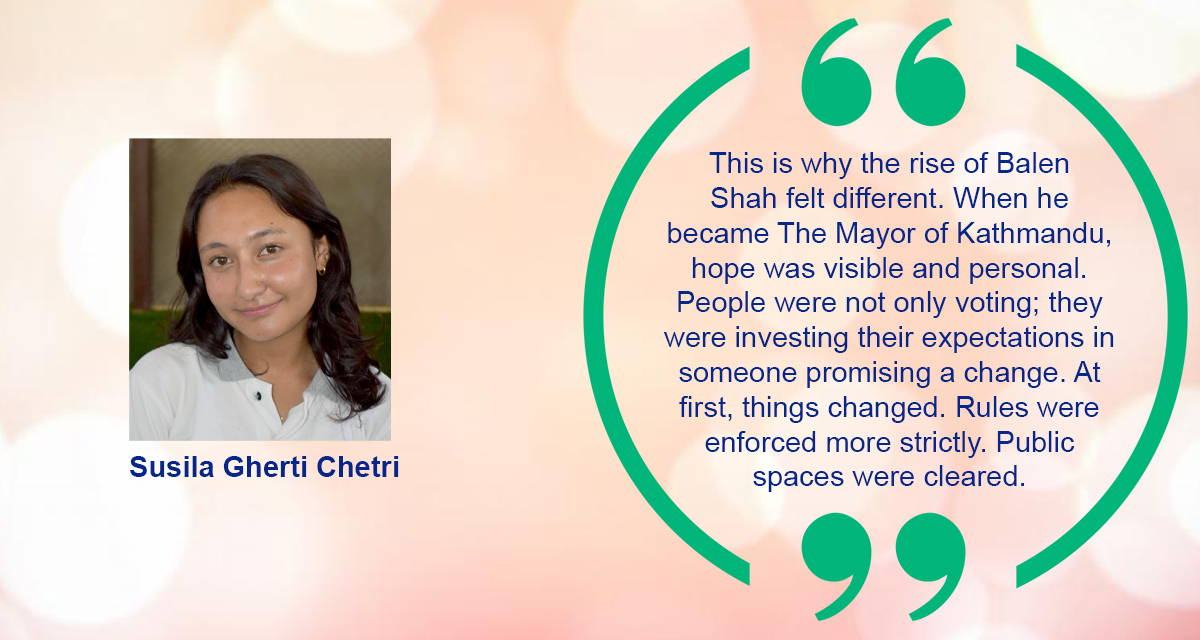
This is why the rise of Balen Shah felt different. When he became The Mayor of Kathmandu, hope was visible and personal. People were not only voting; they were investing their expectations in someone promising a change. At first, things changed. Rules were enforced more strictly. Public spaces were cleared. The city looked different almost overnight. For many, it felt necessary, long overdue, and almost thrilling to see action after years of inaction.
But reactions soon shifted. Not everyone experienced these changes the same way. Some saw progress; others experienced disruption. Street vendors lost spots they depended on. Shop owners were displaced from paths they had used for years. What looked like reform from one side felt like loss from another.
This is where tension grows. Supporting change is easy when it is abstract. It becomes harder when it touches daily life. People are not rejecting reform; instead, they are reacting to its impact. And in Nepal, where livelihoods are often intertwined with informal systems, that impact is deeply personal.
The criticism toward Balen Shah comes from this gap between intention and experience. Yet, the expectation for change has not disappeared. Citizens still want cleaner streets, better roads, and a city that works. The desire remains tempered by hesitation.
Perhaps this is the reality we avoid acknowledging. Change is never comfortable. Its disruption is uneven. And in a society like ours, some are left to bear more of its cost than others.
For leadership to succeed, action cannot be isolated from empathy. Reforms need to account for the people most affected by them. Otherwise, even the right decisions risk alienating those they are meant to help.
The truth is simple: Nepalese do not fear change. They fear being left behind while it happens. Understanding this might finally bridge the gap between bold action and public acceptance and allow genuine transformation to take root.
Facebook Comment
Related News
latest Video
Trending News
- This Week
- This Month