
In Nepal, a Debate over National Attire Highlights a Deeper Question of Identity

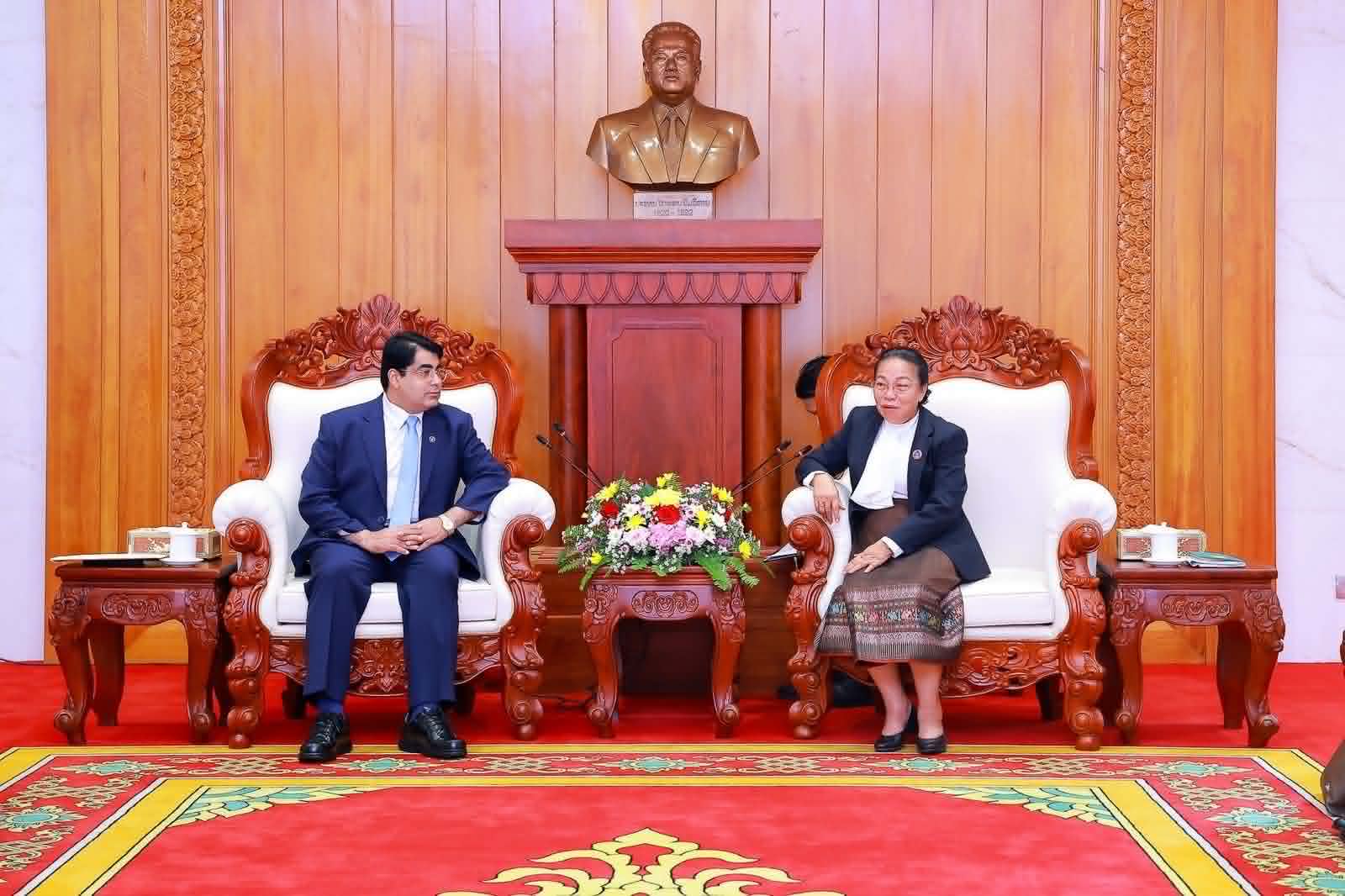
KATHMANDU — a routine diplomatic meeting in Nepal this week unexpectedly ignited a wide ranging national conversation about cultural identity, soft diplomacy, and the symbolism of traditional dress. When the Prime Minister appeared in a non traditional outfit during an official engagement with foreign ambassadors, many Nepalis took to social media to question whether the country’s long standing norms of diplomatic representation were shifting.
For decades, Nepal’s national dress — daura suruwal, coat, and the iconic Dhaka topi — has served as a cultural marker in formal and state settings. Although no legal requirement mandates its use, the attire has historically been associated with official representation, particularly in meetings with foreign dignitaries. The Prime Minister’s decision to forgo the traditional outfit prompted some citizens to ask whether the government was signaling a new direction in protocol or simply adopting a more contemporary style.
The reaction was swift and varied. Some commentators framed the moment as a departure from tradition, while others questioned whether a government with a strong parliamentary majority might be redefining national symbols. The tone of the debate, however, reflected less political polarization and more a collective concern about how Nepal presents itself on the global stage.
In Nepal, national identity is expressed through a tapestry of elements — language, dress, cuisine, cultural practices, and the country’s distinct geography. These components shape how the nation is perceived abroad. For many Nepalis, attire worn by the country’s top leadership during diplomatic engagements carries symbolic weight, representing not just the individual but the nation itself. The Prime Minister’s clothing choice, though personal, became a focal point for broader questions about representation, cultural continuity, and the expectations placed on public officials.
Modern diplomacy has grown more flexible. Leaders around the world increasingly appear in contemporary or hybrid styles, and global norms no longer strictly require traditional dress. Yet in countries where cultural symbols remain deeply intertwined with national pride, even subtle deviations can spark public debate. Nepal, with its rich cultural heritage and strong sense of identity, is no exception.
Analysts note that the current discussion underscores a familiar tension: the balance between tradition and modernity. As Nepal undergoes rapid political and social transformation, questions about how the country should present itself internationally have become more pronounced. For many citizens, traditional attire is not merely a relic of the past but a living symbol of national unity and cultural pride. When leaders appear without it in high profile settings, it can be interpreted — rightly or wrongly — as a shift in how the nation chooses to define itself.
Some observers argue that clearer communication from leadership could help ease public concern. If new practices or stylistic changes are being introduced, a brief explanation could provide context and prevent speculation. Transparency, they say, is essential in a country where cultural symbols carry emotional resonance and where public expectations around national representation remain strong.
The debate over attire also intersects with a broader conversation about soft diplomacy. In many countries, showcasing national dress, traditional foods, handicrafts, and cultural artifacts is considered an essential part of diplomatic engagement. These elements help foreign dignitaries understand the host nation’s identity and values. Nepal, with its diverse ethnic traditions and rich artistic heritage, has long relied on cultural expression as a form of international outreach.
Observers noted another detail during the April 8, 2026 meeting at the Prime Minister’s office: the absence of cultural artifacts, traditional attire, and symbolic items that typically represent Nepal in diplomatic settings. In previous administrations, such meetings often featured Nepali handicrafts, traditional textiles, or cultural motifs displayed prominently in the room. Their absence this week did not go unnoticed.
Some Nepali commentators remarked that these cultural markers appeared missing during the Prime Minister’s engagement with the group of foreign ambassadors. Their concern, they said, was not about protocol alone, but about how a nation chooses to present its heritage on the international stage. In a country where cultural expression is deeply tied to national pride, such omissions naturally draw public attention and invite broader discussion about the balance between modern leadership styles and traditional representation.
Diplomatic experts note that cultural presentation plays a subtle but significant role in shaping international perceptions. “Soft power is not only about policy,” one analyst explained. “It is also about how a country showcases its identity — through dress, art, language, and symbols. These elements help create a narrative about who we are.” In this context, the attire of national leaders becomes more than a personal choice; it becomes part of the country’s diplomatic messaging.
The conversation has also highlighted generational differences in how Nepalis view tradition. Younger citizens, particularly those living in urban areas, often embrace more globalized fashion and may not see traditional attire as essential in every setting. Older generations, however, tend to view national dress as a vital expression of identity, especially in formal or diplomatic contexts. The debate, therefore, reflects not only cultural concerns but also evolving social attitudes.
Despite the differing perspectives, the discussion has remained largely respectful, with many Nepalis emphasizing that their concerns stem from a desire to see their culture represented with dignity. “This is not about criticizing the Prime Minister,” one commentator wrote. “It is about ensuring that Nepal’s identity is visible and honored in spaces where the world is watching.”
The government has not issued a formal statement on the matter, and officials close to the Prime Minister have suggested that attire choices should not be over interpreted. Still, the public conversation continues, fueled by a broader sense of cultural guardianship that many Nepalis feel deeply.
What the debate ultimately reveals is not a dispute over clothing, but a deeper sentiment:
Nepalis remain profoundly connected to their cultural identity, and they expect it to be reflected thoughtfully in national and diplomatic settings. In a rapidly changing political landscape, that cultural awareness continues to anchor the nation’s sense of self.
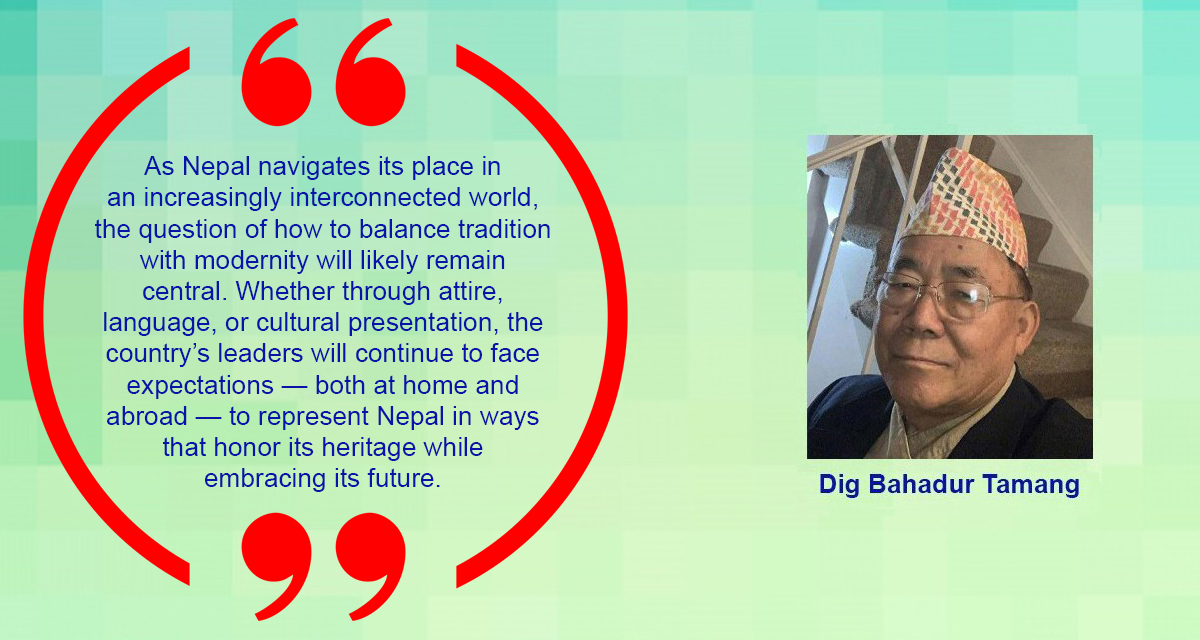
As Nepal navigates its place in an increasingly interconnected world, the question of how to balance tradition with modernity will likely remain central. Whether through attire, language, or cultural presentation, the country’s leaders will continue to face expectations — both at home and abroad — to represent Nepal in ways that honor its heritage while embracing its future.
Conclusion
The analysis presented in this article is derived from an observational and interpretive approach grounded in publicly available discourse and cultural commentary in Nepal. It reflects a neutral scholarly perspective, formulated without prejudice toward any political actor or institution. The intent is to contextualize the ongoing debate within broader frameworks of cultural identity, diplomatic representation, and sociopolitical symbolism. The interpretations offered here should be understood as analytical reflections rather than evaluative judgments, and they aim solely to illuminate the cultural dynamics shaping contemporary public dialogue in Nepal.
Facebook Comment
Related News

latest Video
Trending News
- This Week
- This Month