
Ambassadorial Appointments in Nepal: Historical Structure, Diplomatic Standards, and the Debate on Open Competition

According to news reports published in Kathmandu on Baisakh 16, (April 29, 2026) the government’s recent announcement to select ambassadors through open competition has sparked considerable public interest. The debate is not just about administrative reform; it cuts to the core of Nepal’s diplomatic tradition, constitutional design, and internationally recognized norms. For many observers, the idea of choosing ambassadors through an open competitive process feels “out of left field,” largely because it departs from Nepal’s long standing appointment practices and the inherently sensitive nature of diplomatic posts.
Historically, ambassadorial appointments in Nepal have been driven by the executive branch. The Ministry of Foreign Affairs prepared a list of potential nominees, the Prime Minister and Cabinet made selections based on political, diplomatic, and strategic considerations, and the Parliamentary Hearing Committee provided final approval. As many analysts put it, the traditional system relied on “quiet recommendations followed by parliamentary confirmation.” In other words, ambassadorial appointments were never based on open competition but on a hybrid political administrative model.
Internationally, open competition for ambassadorial positions is also rare. Most diplomatic systems follow one of two major models:
1. Political Appointment Model
Countries such as the United States, Japan, South Korea, and Brazil appoint ambassadors directly through executive leadership, with legislative confirmation. These appointments often reflect political trust, strategic alignment, and the President’s confidence in the nominee.
2. Career Diplomat Model
Countries like Germany, France, the United Kingdom, and Canada appoint ambassadors from within their professional foreign service. Competition happens at the entry level, not at the ambassadorial level. Promotion to ambassador is based on experience, seniority, and performance.
Against this backdrop, Nepal’s proposal to select ambassadors through open competition does not neatly align with either established model. Diplomatic posts are not routine administrative jobs; they are closely tied to national security, foreign policy execution, and the protection of national interests. For this reason, most countries maintain strong political oversight over ambassadorial appointments. An ambassador is not comparable to a mid level civil servant. The role demands diplomatic maturity, an understanding of international norms, and experience in negotiations, language proficiency, and strategic judgment.
Nepal’s diplomatic history shows that career diplomats—those who entered the Ministry of Foreign Affairs at junior levels and rose through experience to Joint Secretary and ambassador—have represented the country effectively. Their institutional memory, administrative competence, and long term exposure to international protocol have strengthened Nepal’s diplomatic standing.
Experiences shared by staff who served fewer than twelve career ambassadors highlight how these ambassadors advanced Nepal’s national interests, strengthened bilateral ties, and contributed to economic and labor diplomacy. Their professionalism and diplomatic sensitivity illustrate the qualities required for effective representation abroad. Diplomacy, in this sense, is not a quick assignment but the culmination of years of discipline and experience.
At the same time, Nepal has seen cases where politically appointed ambassadors struggled with diplomatic protocol, international conduct, or even basic linguistic competence. Public discussions have pointed to instances where ambassadors had difficulty delivering prepared English speeches. Such examples underscore the need for professionalism, merit, and structured pre deployment training. Historical incidents—such as the irregularities reported in December 1987 at the Nepali Embassy in Washington—demonstrate the risks of appointments based solely on favoritism. Nepal paid a reputational price for such decisions, and many hope the current government avoids repeating those mistakes.
Given this context, many analysts argue that any government—regardless of political leadership—should ensure that appointed ambassadors receive robust pre deployment training. This training should cover diplomatic protocol, international law, language skills, and a deep understanding of bilateral relations. Diplomatic missions are not ceremonial outposts; they are frontline institutions for advancing national interests. Sending unprepared individuals weakens Nepal’s credibility and effectiveness abroad.
Reports from Baisakh 16, 2078, indicated that Nepal was preparing, for the first time, to appoint ambassadors through open competition. Although the government established criteria for political appointments in 2019, successive administrations repeatedly ignored these guidelines, continuing to rely on political patronage. This pattern suggests that Nepal’s system of ambassadorial appointments remains far from fully institutionalized. Baisakh 16, 2078 in the Nepali calendar corresponds to April 29, 2021 in the Gregorian calendar. On that date, KP Sharma Oli was serving as Nepal’s Prime Minister during his second tenure, which lasted from February 15, 2018 to July 13, 2021.
Ultimately, the debate over ambassadorial appointments in Nepal is not just about process. It reflects deeper questions about diplomatic tradition, constitutional accountability, and international practice. Whether Nepal chooses a political appointment model, a career diplomat model, or a hybrid system, the decision will shape the country’s diplomatic effectiveness for years to come.
Conclusion
The ongoing debate over ambassadorial appointments in Nepal goes far beyond administrative housekeeping. An ambassador is not just a government representative; they are the face of the nation, the guardian of national interests, and the custodian of diplomatic credibility. Appointing individuals who are competent, disciplined, and diplomatically seasoned is essential.
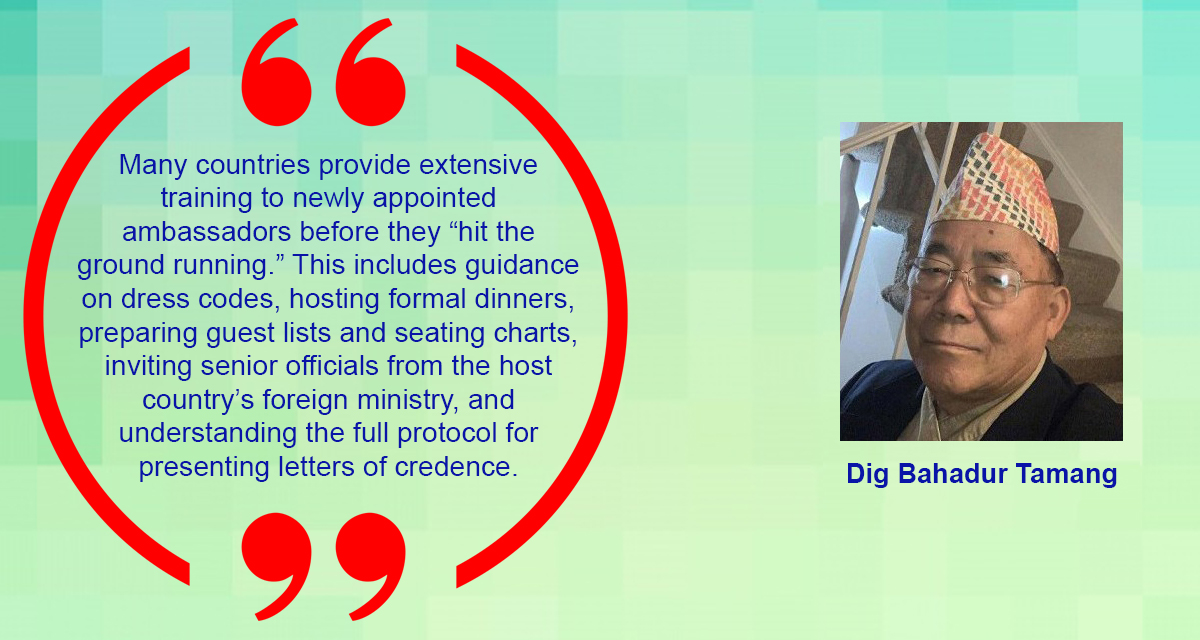
Many countries provide extensive training to newly appointed ambassadors before they “hit the ground running.” This includes guidance on dress codes, hosting formal dinners, preparing guest lists and seating charts, inviting senior officials from the host country’s foreign ministry, and understanding the full protocol for presenting letters of credence. Such preparation ensures that ambassadors can represent their country with confidence and professionalism.
Nepal increasingly recognizes the value of this approach. When qualified and well trained individuals serve as ambassadors, bilateral relations improve, economic and labor diplomacy become more effective, and Nepal’s international credibility grows.
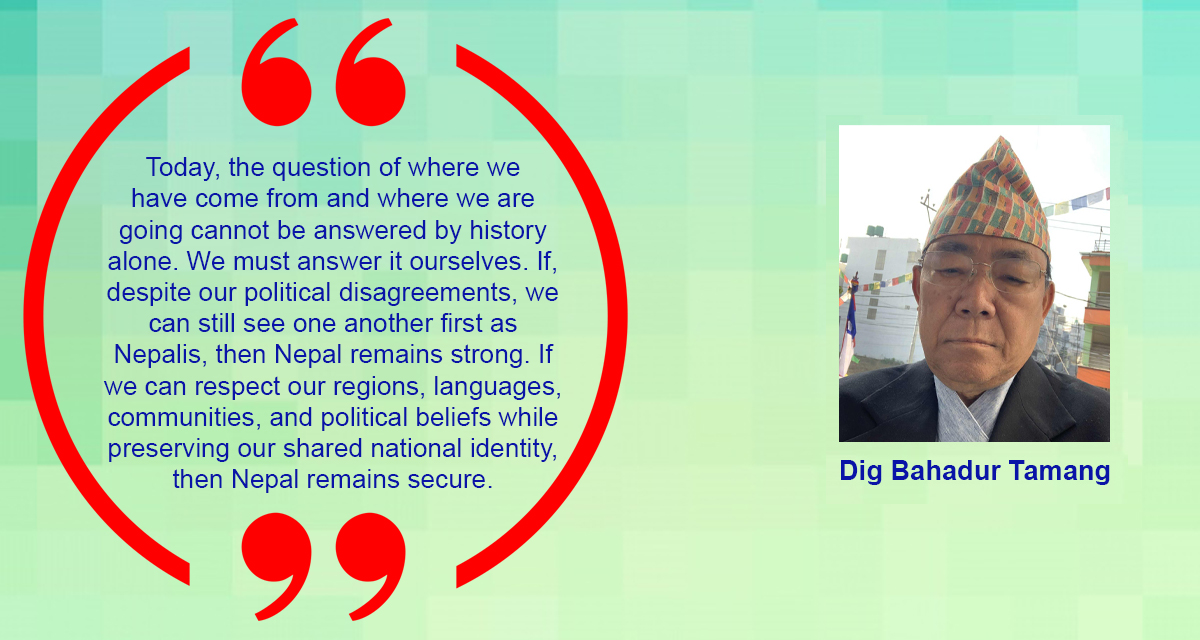
Regardless of whether Nepal adopts a political, career based, or hybrid appointment model, one principle remains clear: all ambassadors should receive systematic, institutionalized, and internationally benchmarked pre deployment training. Diplomacy is not a one off assignment; it is a long term commitment to safeguarding national interests and maintaining the country’s standing on the global stage. Appointing capable and well prepared ambassadors are, in the long run, Nepal’s most effective diplomatic strategy. By Dig Bahadur Tamang.
Facebook Comment
Related News

latest Video
Trending News
- This Week
- This Month