
SCO Summit 2020: Highlights from Xi, Modi and Putin’s address

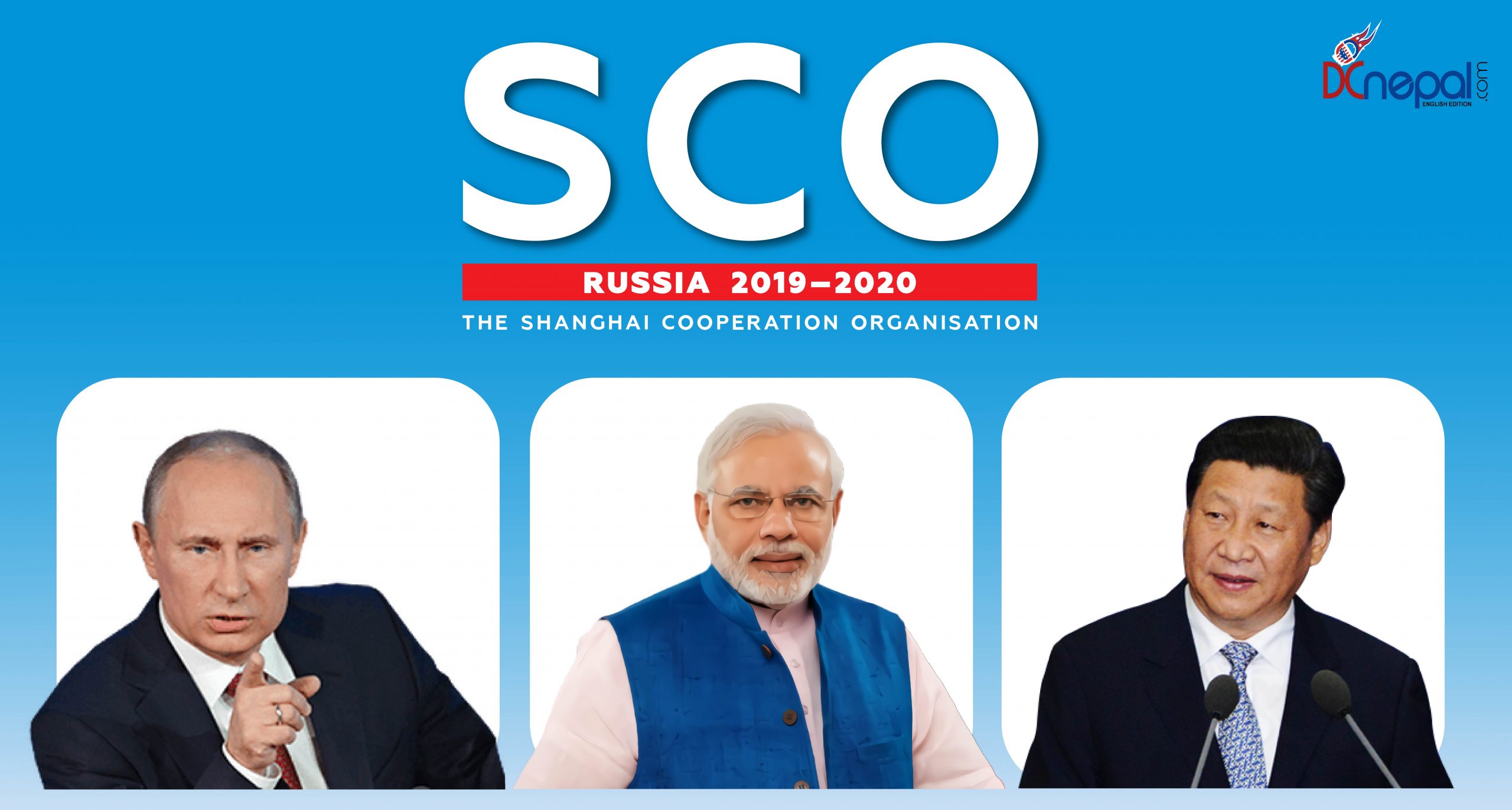
Kathmandu. The Shanghai Cooperation Organization (SCO) comprised of eight member states and four observer states, conducted a virtual summit for 2020 on November 10 that was chaired by Russia’s President Vladimir Putin. The event saw the Indian Prime Minister, Narendra Modi and the Chinese President, Xi Jinping on the same platform for the first time since the military clash in early May, at the Line of Actual Control (LAC), in Eastern Ladakh.
Also known as the Shanghai Pact, the 20th summit of the Organization saw the Council of the Head of States discuss on a plethora of issues, including COVID-19 management, combating drug trafficking and terrorism, and ensuring information security. The Tuesday declaration underscored SCO’s commitment towards ” cracking down on terrorism, separatism and extremism”
Within these general considerations of the member states were the geopolitical tensions that were made apparent in the statements produced by the Heads of States of India, China and Russia. Putin and Xi both slammed the West for their continued involvements in their sovereign prerogatives, by bringing up issues of democracy and human rights, within their national affairs.
The Russian President, in particular, pointed towards the European Union (EU) sanctions that were levied on Belarus, stating that there were “more frequent attempts at crude intervention in the internal affairs of SCO member states,” which is a “a gross violation of sovereignty and attempts to trigger a rift in society, alter the country’s development vector and uproot the centuries-old political, economic and humanitarian ties.”
Xi added that, the states should “resolutely oppose external forces” interfering in their internal affairs under any pretext.” He further stressed upon a “common, comprehensive, cooperative and sustainable security,” and put forth the proposal for a hotline to connect the respective states’ Centers for Disease Control,”for timely updates on cross-border transmission of communicable diseases.”
He posited that within efforts of global development, China would remain an important link, inseparable from future considerations. Saying that the state was focused on further opening up its economy, Xi sent a call to the participating states to engage in the “development opportunity and make active endeavors to enhance cooperation with China.” This is reflective of the nation’s 14th Five-Year Plan (2021-2025) for National Economic and Social Development and the Long-Range Objectives Through the Year 2035, that was approved by the 5th Plenum of the 19th Communist Party Central Committee.
Modi, on the other hand, had addressed the Council by reaffirming India’s commitment to the SCO Charter, but expressed disappointment in the efforts to bring bilateral matters at the fore of Council discussions. His statement was more likely aimed towards Pakistan and China.
“India believes that to enhance connectivity it is important that we move forward while respecting one another’s sovereignty and territorial integrity,” he added.
The UN Secretary‑General António Guterres also spoke at the meeting, where he underlined the significance of the SCO within Eurasia, commenting on the necessity of cooperation between the two organizations, on issues such as the coronavirus pandemic, climate change and human rights. He noted, “As the landscape evolves and new threats emerge, we look forward to benefiting from SCO’s regional expertise to strengthen our joint assistance to Member States.”
Xi, Modi, and Putin are expected to cross paths once more during the BRICS (acronym for Brazil, Russia, India, China, and South Africa) summit on November 17, 2020.
Facebook Comment
Related News
latest Video
Trending News
- This Week
- This Month