
Halloween: Historical Origins, Christian Traditions, and Global Cultural Transformation

Introduction
Celebrated annually on October 31, Halloween is one of the most familiar and widely recognized cultural festivals in the Western world. Traditionally known as All Hallows’ Eve, it falls on the evening proceeding November 1, which is observed in the Christian tradition as All Saints’ Day, a day dedicated to honoring all saints.
Today, the mention of Halloween immediately brings to mind carved pumpkins, human skeletons, witches, ghosts, frightening costumes, sweets, and lively social gatherings. Behind these colorful and sometimes eerie celebrations, however, lies a long and fascinating history shaped by ancient European traditions, Christianity, folklore, and social customs that have evolved over centuries.
1. Historical Origins: From Ancient Celtic Traditions to Christianity
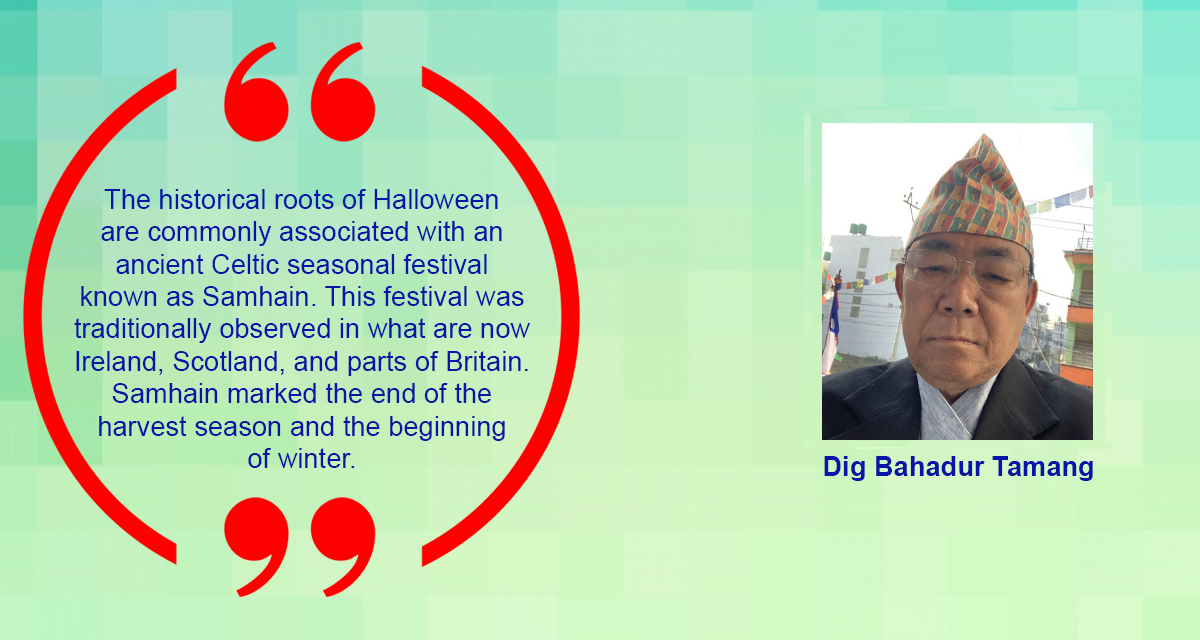
The historical roots of Halloween are commonly associated with an ancient Celtic seasonal festival known as Samhain. This festival was traditionally observed in what are now Ireland, Scotland, and parts of Britain.
Samhain marked the end of the harvest season and the beginning of winter. In traditional Celtic society, winter was regarded as a dark, difficult, and challenging period of the year. According to ancient Celtic beliefs, during this transitional period, the boundary between the world of the living and that of the dead became less distinct. Consequently, people developed customs such as lighting large bonfires, performing protective rituals, and wearing symbolic disguises to protect themselves from harmful spirits.
As Christianity gradually spread throughout Europe, many existing seasonal and cultural traditions began to interact with Christian religious observances. The Christian Church established November 1 as All Saints’ Day, also known as All Hallows’ Day. This day is dedicated to honoring saints and martyrs of the Christian faith. Similarly, November 2 became associated with All Souls’ Day, a day devoted to remembering the departed and expressing respect and prayers for the souls of the dead.
The evening proceeding All Saints’ Day came to be known as All Hallows’ Eve, a term that gradually evolved into the familiar word Halloween. Over the centuries, religious observances and popular folklore influenced one another, giving rise to a distinctive cultural celebration incorporating remembrance of the dead, supernatural beliefs, seasonal customs, and community activities.
It is important to understand that modern Halloween is neither exclusively an ancient Celtic festival nor purely a Christian religious celebration. Rather, it represents the culmination of centuries of interaction and transformation among different religious and cultural traditions.
2. Why Is Halloween celebrated in autumn?
One particularly interesting aspect of Halloween is its historical association with the autumn season. In the Northern Hemisphere, October represents a transitional period between the end of summer and the beginning of winter. During this time, leaves begin to fall from trees, daylight hours become shorter, and farmers complete the final stages of harvesting their crops before the onset of winter.
These seasonal changes help explain the historical association of Halloween with darkness, death, rebirth, and the natural cycle of life. Decorations made from pumpkins, cornstalks, dried leaves, and other agricultural products also reflect the festival’s historical connection with farming and the harvest season.
Pumpkins hold a particularly important place in Halloween celebrations in North America. Their popularity is connected to an older Irish and Scottish tradition of carving turnips and other root vegetables into lanterns.
When Irish immigrants arrived in the United States during the nineteenth century, they discovered that pumpkins were larger, more readily available, and easier to carve than the vegetables traditionally used in their homeland. Consequently, the practice of hollowing out pumpkins, carving frightening faces into them, and placing lights inside gradually became popular.
This tradition gave rise to the familiar Jack-o’-lantern, which has since become one of the most recognizable symbols of Halloween.
3. from Religious Observance to a Popular Social Celebration
Halloween underwent considerable transformation after European immigrants brought their cultural traditions to North America. During the nineteenth and twentieth centuries, it gradually evolved into a community-oriented social celebration, extending beyond its earlier religious and folkloric associations.
Today, in cities and residential neighborhoods throughout the United States, people decorate their homes with illuminated pumpkins, human skeletons, artificial spider webs, witches, ghosts, and symbolic representations of graveyards.
Families participate in the popular tradition of Trick-or-Treating. Under this custom, children dress in attractive, imaginative, or frightening costumes and visit neighboring houses to collect sweets, chocolates, and other treats.
Young people and adults also participate in costume parties, musical performances, street festivals, and other entertainment activities.
For example, in Washington, D.C., various Halloween events are organized in the downtown area, restaurants, residential neighborhoods, and public entertainment venues. People dress up as historical personalities, fictional characters, monsters, superheroes, and other imaginative figures.
These activities demonstrate how Halloween has gradually moved beyond its historical religious background to become a major social, cultural, and commercial celebration.
4. Halloween as a Celebration of Community Spirit and Social Interaction
One of the most interesting aspects of Halloween is its ability to bring together people from different generations and age groups.
Children enjoy collecting sweets, parents participate in activities with their families, young adults attend parties and entertainment events, and local businesses organize special programs to mark the occasion.
Decorations displayed in homes and neighborhoods also provide opportunities for residents who might not otherwise interact frequently to become acquainted and strengthen their social relationships.
Schools organize costume competitions, community centers arrange seasonal activities, and local organizations host family-friendly events designed particularly for children and their parents.
In this sense, Halloween has become more than an occasion for entertainment. It provides an opportunity to promote social participation, creativity, mutual goodwill, and a sense of community identity.
Although its outward appearance sometimes incorporates frightening images and mysterious symbols, the spirit of modern Halloween is largely rooted in humor, imagination, entertainment, and collective enjoyment.
5. Halloween in Europe, America, and Other Parts of the World
Halloween is no longer confined to predominantly Christian countries, nor is it limited to Europe and North America. Its cultural influence has gradually extended too many other parts of the world.
Ireland and Scotland, where many of its historical traditions originated, continue to attach particular cultural significance to Halloween. It is also widely observed in the United Kingdom, although customs and forms of celebration vary among different communities.
In the United States and Canada, Halloween has developed into an especially elaborate and popular celebration. House and neighborhood decorations, children’s Trick-or-Treating activities, and large public events are among its most prominent attractions.
During an opportunity to observe Halloween celebrations in São Paulo, Brazil, in 2011, I could also witness the growing international influence of American popular culture. Schools, shopping centers, restaurants, and entertainment venues were organizing various activities associated with Halloween.
Similar celebrations can also be found in Japan, South Korea, Mexico, and many other countries. Nevertheless, the cultural meaning, social significance, and manner of celebration may differ considerably according to local traditions.
Mexico, for example, has its own important cultural observance known as Día de los Muertos, or the Day of the Dead. It is celebrated primarily on November 1 and 2.
This festival is associated with remembering deceased family members, honoring their memory, and maintaining the continuity of family relationships. Its historical foundations lie in the interaction between Indigenous traditions and Catholic religious culture.
Although Halloween and Día de los Muertos share certain themes relating to the remembrance of the dead, their historical origins, religious beliefs, and cultural expressions are distinct. Therefore, it would be inappropriate to regard them as identical celebrations.
These developments demonstrate that Halloween has expanded beyond the boundaries of any particular religion, nation, or geographical region to acquire a significant international cultural presence.
6. Conclusion: A Celebration of History, Imagination, and Community Spirit
Halloween offers an interesting historical illustration of how traditions evolve alongside social development and interaction among different cultures.
Originating in ancient seasonal customs and subsequently becoming intertwined with Christian religious observances, the festival has gradually developed into an international celebration centered on imagination, entertainment, social interaction, and cultural exchange.
Whether people carve pumpkins, wear imaginative or frightening costumes, decorate their homes, attend parties, or simply enjoy watching children participate in Trick-or-Treating, these activities provide opportunities for members of a community to come together and share moments of happiness.
Having observed Halloween celebrations in the United States and experienced their cultural influence in São Paulo, Brazil, in 2011, I find one aspect particularly fascinating: how a tradition with deep historical roots in Europe has managed to cross geographical and cultural boundaries and become part of the social life of societies across the world.
The continuing popularity of Halloween demonstrates that cultural traditions are neither static nor unchanging. Their forms evolve over time, acquire new meanings, and gradually become integral components of the social lives of different nations.
Ultimately, Halloween is much more than an entertaining festival characterized by pumpkins, skeletons, and frightening costumes. It is also a living reflection of history, religious heritage, seasonal changes, cultural interaction, and the natural human desire to celebrate collectively.
Three Important Historical Distinctions to Understand Halloween
To understand the historical background of Halloween more accurately, it is useful to distinguish among three important elements:
1. Samhain: An ancient Celtic seasonal festival particularly associated with Ireland and parts of Britain.
2. All Saints’ Day and All Souls’ Day: Christian religious observances dedicated respectively to honoring saints and remembering the souls of the departed.
3. Modern Halloween: A contemporary cultural celebration that developed substantially through European migration, particularly in North America, and has become largely secular in character.
Thus, Halloween is neither exclusively a Christian religious festival nor merely an American celebration. Its historical development reflects centuries of interaction among diverse religious and cultural traditions.
Final Reflection
I hope this article will provide a useful historical, religious, and social perspective for understanding Halloween, particularly for readers interested in the celebrations and cultural experiences that can be observed on both sides of the Atlantic—in Europe and America.
Sources and Research Note
This article has been prepared through the study, observation, and reference to various online resources, historical and cultural materials available through Google searches, and articles published in national and international newspapers and other media.
In preparing the article, an effort has been made to examine the available materials comparatively and incorporate relevant historical facts, religious traditions, and cultural perspectives into a coherent presentation.
In addition, my personal observations of Halloween celebrations in the United States, together with my experience of the festival in São Paulo, Brazil, in 2011, have contributed to the social and cultural analysis presented in this article.
The article is not a direct translation or reproduction of any single source. Rather, it is an independent presentation based on available reference materials, personal observations, and the author’s own study and analysis.
About the Author
Dig Bahadur Tamang is a former Nepalese diplomat who served in Nepal’s diplomatic service for 38 years. His extensive professional experience has provided him with considerable practical knowledge of diplomatic affairs, international relations, and the social and cultural environments of different countries.
Throughout his long diplomatic career, he had opportunities to observe and understand various dimensions of the international community at close quarters.
With a deep and enduring interest in literature, he has remained actively engaged in literary reading, creative expression, and writing. His literary works, including short stories, poems, and essays, have appeared in newspapers, literary journals, and other publications.
History, culture, religion, international relations, and contemporary global affairs are among his principal areas of intellectual interest and writing.
Drawing upon his extensive diplomatic experience, firsthand exposure to diverse international environments, and literary sensibilities, he approaches a wide range of subjects from analytical, creative, and reflective perspectives.
His work brings together three important dimensions of his identity: diplomatic experience, literary dedication, and creative expression.
Facebook Comment
Related News

latest Video
Trending News
- This Week
- This Month